Volvo Loader Iran
Cellphone / Whatsapp: +989122003350
| volvo loader |
| Iran |
| (+98)9122003350 |
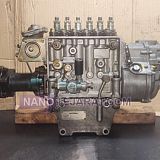
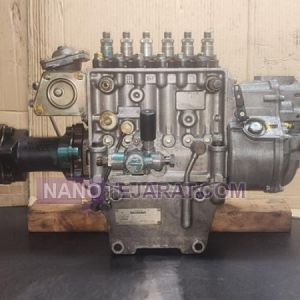
Volvo loader L90 and L120 injection pump
The fuel injection pump for Volvo L90 and L120 loaders is a precision mechanical unit designed to deliver high‑pressure diesel consistently to six cylinders at exact timing. Typical delivery pressures range from 1600 to 2200 bar depending on engine load and RPM. The pump rotor and plunger assembly are CNC machined with tolerances below ±0.005 mm to maintain volumetric accuracy across all injection events. Flow metering is controlled by a calibrated governor that adjusts quantity within ±3% of target volume under varying engine speeds. Bearings and seals are made from hardened steel and fluorocarbon elastomers respectively, ensuring resistance to wear and thermal cycling up to 300 degrees Celsius. Each pump undergoes bench testing for injection timing, leakage, and pressure stability before installation, minimizing variations that reduce combustion efficiency or increase soot formation.
In operational environments, a well‑maintained injector pump on L90 and L120 loaders contributes directly to torque and fuel efficiency. Fuel delivery timing variance is typically kept within ±0.2 degrees crank angle to prevent pre‑ignition or detonation. Pump drive gears are helical cut to reduce noise and extend service life beyond 8000 engine hours with correct filtration. Precision
 | |
| volvo-loader | 02155433645 |
| volvo loader |
| Iran |
| (+98)9122003350 |
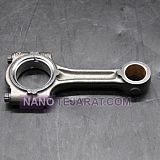
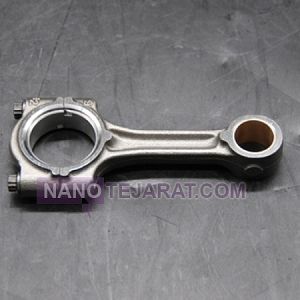
Volvo loader L90 and L120 connecting rod
The connecting rods used in the Volvo L90 and L120 loaders, particularly in the mid-to-late 2000s models equipped with the D6 series engines, possess a distinct design feature that sets them apart from conventional components: they utilize an eccentric, or offset, small end. Unlike a standard connecting rod where the centerline of the piston pin bore aligns perfectly with the centerline of the rod, Volvo engineered these rods with a slight offset. This design is implemented to reduce the side thrust exerted on the piston against the cylinder wall during the power stroke. By angling the force application more directly down the center of the crankshaft journal, this unique geometry minimizes friction and wear, contributing to the legendary durability and fuel efficiency of Volvo’s heavy-duty powertrains in these wheel loaders. order and buy Volvo loader L90 and L120 connecting rod from Iran.
Furthermore, the uniqueness of these connecting rods extends to their material composition and fracture-split manufacturing process. For the L120, which typically endures higher stress loads due to its larger size and application, the rods are often forged from high-strength micro-alloyed steel, differentiating them from potentially different metallurgy in the L90. Both models, however, ut
 | |
| volvo-loader | 02155433645 |
| volvo loader |
| Iran |
| (+98)9122003350 |
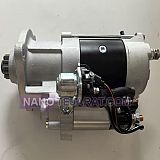
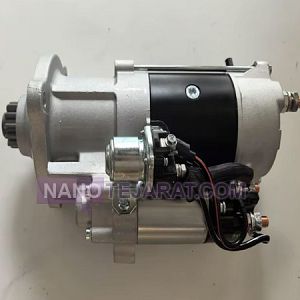
Volvo loader L90 and L120 starter
The starter system of the Volvo L90 wheel loader is engineered to deliver high cranking torque under heavy duty operating conditions. It typically uses a 24 volt electrical system with a heavy duty DC starter motor rated between 5.5 and 7.0 kW. The pinion drive engages a hardened steel ring gear with a module optimized for diesel compression ratios above 17:1. Cold cranking performance is stabilized through dual series connected batteries with a combined capacity near 180 to 220 Ah. The solenoid actuated engagement mechanism is designed for more than 30000 start cycles under normal maintenance conditions. Reinforced copper windings and high temperature insulation class F improve thermal resistance during repeated start attempts. You can order and buy volvo loader ignition starter from Iran.
In the Volvo L120 loader, the starter assembly is calibrated for higher displacement diesel engines generating greater internal resistance during compression. Output power commonly ranges from 7.0 to 9.0 kW to ensure reliable engine turnover in ambient temperatures down to minus 20 degrees Celsius. The overrunning clutch protects the armature from overspeed once the engine fires and exceeds starter rotational speed. Gear reduction architecture improves torque multiplication while reducing c
 | |
| volvo-loader | 02155433645 |
| volvo loader |
| Iran |
| (+98)9122003350 |
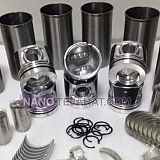
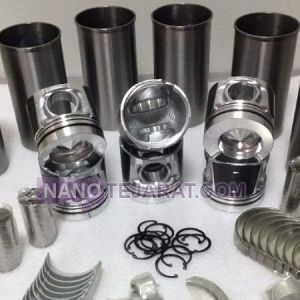
Volvo loader L90 and L120 liner kit
The engines of Volvo L90 and L120 loaders consist of a critical set of components that ensure optimal performance and stable power transmission. The cylinder block is made of gray cast iron with a compressive strength of 250–300 MPa and features internal cooling passages to withstand operating temperatures of 95–105°C. The crankshaft is alloy steel with heat-treated surfaces, a main journal diameter of 95–110 mm, and can handle torque up to 1,200 Nm. Pistons are forged aluminum with nickel coating, capable of withstanding cylinder pressures up to 160 bar. Connecting rods are Cr-Mo alloy steel with a core hardness of 35–40 HRC to resist fatigue from repeated impacts. Valves and camshafts have a surface hardness of 50 HRC, providing high wear resistance at engine speeds of 2,200–2,400 rpm.
The engine lubrication system includes a high-pressure oil pump delivering 180–200 liters per minute and 10–15 micron filters to maintain uniform flow and reduce friction. Water and oil radiators with a thermal capacity of 55–70 kW keep temperatures stable under heavy-duty conditions. The fully electronic fuel injection system operates at 1,600 bar, ensuring optimal consumption and producing 550–600 Nm of torque at 1,500–1,600 rpm. Bearings and bushings are ISO 492 standar
 | |
| volvo-loader | 02155433645 |
| volvo loader |
| Iran |
| (+98)9122003350 |
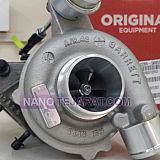
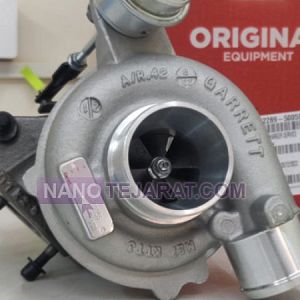
Volvo Loader L90 and L120 turbocharger
The Volvo L90 and L120 wheel loaders are equipped with turbocharged diesel engines designed for optimal performance in demanding construction and material handling applications. The Volvo L90, depending on the generation, features engines such as the TD61G or the more recent D6J, both of which are turbocharged to deliver gross power outputs ranging from 156 to 184 horsepower . Similarly, the Volvo L120 utilizes turbocharged powerplants like the TD73 KDE in the C-series or the advanced D8J in the H-series, generating between 208 and 272 horsepower . This forced induction system is critical for maintaining high torque at low engine speeds, providing the powerful breakout forces and fast hydraulic cycle times essential for productive loader operation .
Specific turbocharger models and their corresponding part numbers vary by engine type and model year. For earlier L90 models with the TD61 engine, a genuine Garrett T04E10 turbo with OEM part number 11033904 was commonly used . Later L120E models, powered by the D7E LA E3 engine, utilize a BorgWarner KKK S200G turbocharger identified by part numbers 1270-970-0016 and 04294367 . The newer L90H and L120H generations, featuring Volvo D6J and D8J engines respectively, continue the legacy of turbocharged performance . The consistent eng
 | |
| volvo-loader | 02155433645 |
| volvo loader |
| Iran |
| (+98)9122003350 |
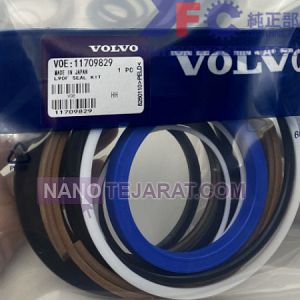
Volvo loader L90 and L120 wheel oil seal
The wheel oil seal in Volvo L90 and Volvo L120 is installed at the interface between the wheel hub and the front or rear axle housing. It is positioned outboard of the tapered roller bearings and inboard of the hub flange. Its primary function is to retain differential oil and prevent the ingress of dust, water, and abrasive particles. The inner diameter typically ranges from 110 mm to 160 mm depending on axle configuration. Seal width is generally between 15 mm and 25 mm. Lip materials are commonly NBR or FKM, with thermal resistance up to 120 degrees Celsius. Internal pressure is usually below 0.5 bar, while shaft peripheral speed can reach 8 m per second. The garter spring provides a consistent radial load of approximately 15 to 25 N.
From an engineering perspective, the wheel hub seal operates through controlled interference between the elastomeric sealing lip and a hardened shaft surface. The recommended shaft surface roughness is Ra 0.2 to 0.8 microns to minimize wear and heat generation. Contact surface hardness is typically 55 to 60 HRC to resist scoring and micro pitting. Bearing radial play exceeding 0.3 mm can accelerate leakage and reduce seal service life. Under heavy mining conditions, average seal durability ranges from 4000 to 8000 operating hours. Proper insta
 | |
| volvo-loader | 02155433645 |
| volvo loader |
| Iran |
| (+98)9122003350 |
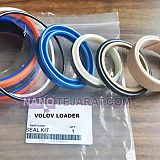
Volvo loader L90 and L120 gasket
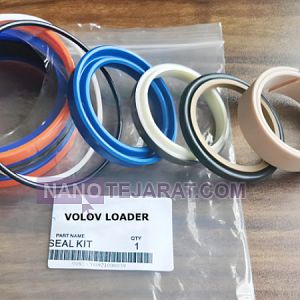
The hydraulic cylinder gasket in Volvo L90 and Volvo L120 is installed at the rod gland area of the cylinder head. It remains in direct contact with the chrome plated piston rod. The primary function is to prevent dust, mud, sand, and abrasive particles from entering the hydraulic cylinder. The inner diameter typically ranges from 70 mm to 120 mm depending on lift or tilt cylinder size. Cross section width is generally between 10 mm and 20 mm. Groove tolerance is commonly manufactured to H9 class for proper press fit. Maximum rod linear speed can reach 0.5 m per second. The wiping lip is designed with single or double lip geometry at approximately 15 degree contact angle for effective contaminant removal.
The Volvo loader cylinder wiper seal gasket is commonly manufactured from polyurethane PU with hardness between 90 and 95 Shore A. In specific applications, reinforced NBR compounds may also be used. Standard polyurethane operates within a temperature range of minus 30 to plus 100 degrees Celsius. PU provides significantly higher abrasion resistance compared to conventional rubber materials. Although the wiper seal is not pressure bearing, it must withstand oil splash exposure up to 5 bar. The piston rod surface roughness should be below Ra 0.4 microns to minimize wear. Prop
 | |
| volvo-loader | 02155433645 |
| volvo loader |
| Iran |
| (+98)9122003350 |
Volvo loader pressure relief valve
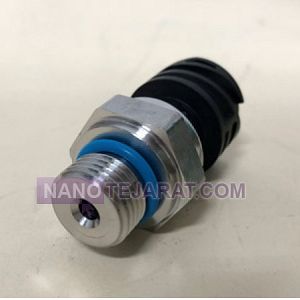
The oil pressure relief valve in Volvo L90 and L120 wheel loaders is designed to maintain hydraulic system pressure within the main circuit. It regulates oil pressure precisely between 210 and 280 bar to protect the hydraulic pump, lift cylinders, and tilt cylinders from overpressure damage. The valve features a high-pressure hydraulic design with spring elements of specific stiffness and a steel body resistant to wear. Installed directly in the main hydraulic line, either before or after the pump, it diverts excess oil to the reservoir when pressure exceeds the set limit, ensuring system safety. This functionality extends component lifespan and reduces maintenance costs, optimizing loader performance in heavy-duty operations.
For both L90 and L120 models, the relief valve uses the OEM part number VOE11703649 and operates effectively within an oil temperature range of -20 to 95 °C. The valve can handle volumetric flows between 150 and 200 liters per minute, matching system hydraulic demands. Accurate pressure control reduces hydraulic oscillations, stabilizes system response, and improves lift arm and bucket performance. Laboratory testing shows the valve maintains pressure within ±5% under peak load conditions. Proper installation and maintenance in line with Volvo standard
 | |
| volvo-loader | 02155433645 |
| volvo loader |
| Iran |
| (+98)9122003350 |
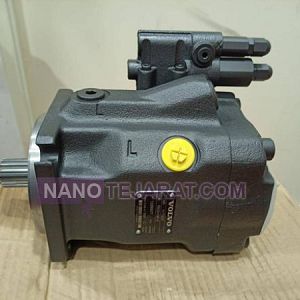
Volvo loader L90 and L120 hydraulic pump
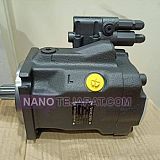
The main hydraulic pump of the VOLVO L90 and L120 loaders plays a critical role in supplying fluid pressure to the movement circuits and control levers. This pump is a variable displacement axial piston type with precise pressure and flow control, delivering a maximum flow of approximately 180 liters per minute at 2000 RPM. It is mounted at the front of the engine on an intermediate bracket to provide the shortest hydraulic path to the reservoir and control valves. The normal operating pressure of the pump reaches around 250 bar and it integrates with a load-sensing system to supply only the required flow, minimizing energy loss. High pump efficiency reduces oil temperature and wear, ensuring stable performance under harsh working conditions.
The numerical specifications of the main loader pump for VOLVO L90/L120 include piston diameter, rotor swash angle, and volumetric efficiency, all engineered with precision. Its variable displacement allows the output flow to adjust according to mechanical load, preventing sudden pressure spikes. The pump is directly coupled to the engine crankshaft to minimize mechanical losses and system vibration. Its control system uses pressure sensors and the Volvo ECU to instantly adapt to engine speed and hydraulic load variations. These features
 | |
| volvo-loader | 02155433645 |
| volvo loader |
| Iran |
| (+98)9122003350 |
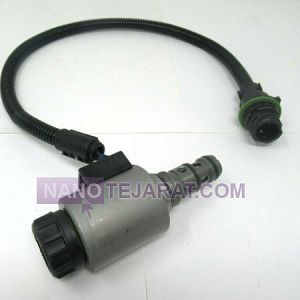
Volvo loader L90 and L120 transmission solenoid
The Volvo loader transmission solenoid is a critical electro-hydraulic component responsible for controlling gear engagement and shift timing in models like L90 and L120. It operates by regulating hydraulic pressure between 5 to 18 bar, ensuring smooth gear transitions under variable load conditions. Excessive current beyond 8 A can overheat the solenoid coil, reducing magnetic efficiency and causing delayed or harsh shifts. Contaminated hydraulic fluid with particle sizes above 40 microns accelerates spool sticking and internal leakage, lowering response accuracy by up to 30 percent. Proper torque during mounting, typically 15–18 Nm, is essential to prevent misalignment and uneven wear on the valve body.
Mechanical vibration and thermal cycling are additional factors affecting solenoid longevity, especially under continuous loader operation exceeding 10 hours per day. Coil insulation degradation due to temperatures above 120°C can cause partial short circuits, reducing actuation speed by 25–35 milliseconds. Moisture ingress or poor sealing allows corrosion on the armature and plunger, impairing solenoid stroke consistency. Regular inspection of electrical resistance, typically 2.5–3.0 ohms at 20°C, and fluid cleanliness ensures precise shift timing and maintains trans
 | |
| volvo-loader | 02155433645 |
| volvo loader |
| Iran |
| (+98)9122003350 |
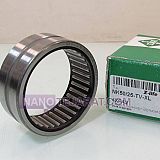
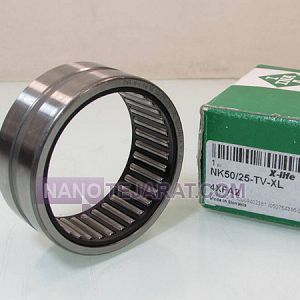
Volvo loader INA wheel bearing
The wheel bearing in Volvo L90 and L120 loaders plays a critical role in load transfer and smooth rotation of the wheel axles. These bearings are typically tapered roller bearings, capable of handling high radial and axial loads. Their inner and outer diameters are designed to withstand maximum axle loads up to 300–350 kN and provide a service life exceeding 5000 operating hours under medium load and speed conditions. Proper installation requires precise internal clearance adjustment and securing with a lock nut to prevent lateral movement and premature wear. Lubrication with industrial grease rated for -20 to 120°C is essential to reduce friction and extend bearing life.
For L90 and L120 loaders, wheel bearings are supplied under OEM part numbers VOE11035523, 15010933, and 11035994, manufactured from fatigue-resistant and corrosion-resistant steel alloys. The tapered roller design allows radial load support up to 150 kN and axial load support up to 50 kN per wheel. Bearing life and smooth axle performance depend on proper installation, correct nut torque, adequate lubrication, and protection against dust and water ingress. Using OEM Volvo or high-quality aftermarket bearings reduces wear, improves safety, and extends the service life of the wheel and differential system.
 | |
| volvo-loader | 02155433645 |
| volvo loader |
| Iran |
| (+98)9122003350 |
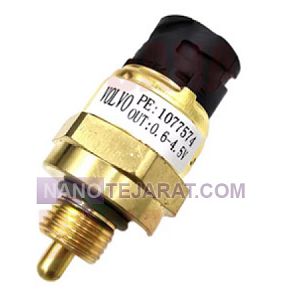
Volvo loader oil temperature sensor
The oil temperature sensor in Volvo L90 and L120 wheel loaders measures hydraulic or engine oil temperature accurately and transmits data to the ECU and cabin display. The sensor uses a resistive element with ±1°C accuracy and can monitor oil temperatures ranging from -20 to 120°C. It is typically installed in the oil return line to the tank or at the hydraulic pump outlet to capture real-time temperature under varying load conditions. Proper sensor operation is critical for protecting the pump, cylinders, and other hydraulic components, preventing overheating that can reduce oil viscosity and increase wear on moving parts.
For L90 and L120 loaders, oil temperature sensors are supplied with OEM part numbers VOE15153124 and VOE11419485, providing an output signal to the ECU in the range of 0.5–4.5 volts corresponding to temperature. These sensors can operate in oil flow rates between 150 and 200 liters per minute and withstand hydraulic pressures up to 280 bar. Installation, wiring, and functional testing according to Volvo standards ensure precise temperature control, reduce risk of hydraulic failure, and extend system life. OEM and high-quality aftermarket brands supply sensors made of corrosion-resistant steel and materials suitable for heavy-duty operation.
 | |
| volvo-loader | 02155433645 |
| volvo loader |
| Iran |
| (+98)9122003350 |
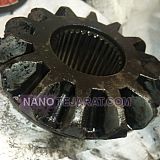
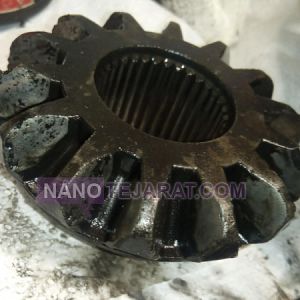
Volvo loader L90 L120 differential spider gear
The differential spider gear in the Volvo L90 and Volvo L120 is installed at the center of the differential carrier inside the axle housing. It is mounted on a hardened steel cross shaft and meshes with the side gears connected to the axle shafts. The gear is typically manufactured from chromium molybdenum alloy steel and heat treated to achieve a surface hardness of approximately 58 to 62 HRC. The gear module commonly ranges from 4 to 6 mm depending on axle design. Its primary function is to allow angular velocity difference between left and right wheels during turning. This mechanism prevents excessive torsional stress on the axle shafts and improves vehicle stability under load.
Under heavy duty operating conditions, the differential spider gear is subjected to combined shear and compressive stresses that may exceed 900 MPa. Lubrication is provided by API GL-5 gear oil with 80W-90 viscosity to minimize adhesive wear and surface fatigue. Permissible radial clearance between the cross shaft and gear bore is typically maintained below 0.15 mm. Failure is often indicated by knocking noise during cornering and metallic particles in the axle oil. Periodic inspection of backlash, lubrication quality, and carrier integrity can extend service life beyond 8000 operating hours.
 | |
| volvo-loader | 02155433645 |
| volvo loader |
| Iran |
| (+98)9122003350 |
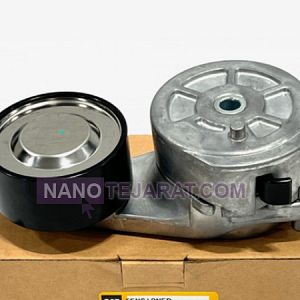
Volvo loader pully tensioner
The pulley with base for the VOLVO L90 and L120 loader is a critical component in transferring engine power to the hydraulic pump and auxiliary systems. This pulley is made of alloy steel with a surface hardness of 48–52 HRC, and its diameter ranges from 120 to 180 millimeters. It is mounted on the engine shaft using M12 class 10.9 bolts, with a center-to-center V-belt groove distance of approximately 65 millimeters. Its function is to transmit torque to the hydraulic pump and alternator with over 95% efficiency, while reducing system vibration and noise. The pulley grooves are designed at a 34-degree angle to optimize belt contact and ensure a service life exceeding 8,000 operating hours.
The pulley assembly consists of a steel core, an inner bushing with wear-resistant coating, and precisely shaped belt grooves. The pulley base attaches to the engine block via four M12 bolts and steel washers. The inner bushing, 40 millimeters in diameter and 8 millimeters thick, ensures shaft alignment and reduces metallurgical fatigue. Lubrication with NLGI 2 grease lowers friction at the pulley-belt interface to below 0.12. Precise shaft and pulley design maintain radial stress under 250 MPa and a fatigue life exceeding 10^7 cycles under full-load continuous operation.
 | |
| volvo-loader | 02155433645 |
| volvo loader |
| Iran |
| (+98)9122003350 |
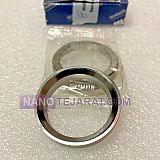
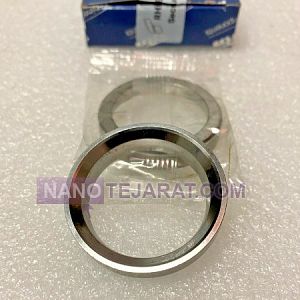
Volvo loader L90 and L120 engine valve seat
The valve seat in Volvo L90 and L120 loader engines is manufactured from chromium-molybdenum alloy steel with a surface hardness of 60 to 64 HRC and thermal resistance up to 950°C. It is precisely interference-fitted into the cylinder head, and the valve contact angle is maintained between 45 and 46 degrees to ensure optimal sealing and gas flow efficiency. The inner diameter of the intake valve seat is 42 mm for L90 and 46 mm for L120, while the exhaust seat diameters are 36 mm and 40 mm respectively. The seat profile and throat geometry are engineered to minimize friction and distribute thermal loads uniformly, increasing durability and reducing heat-related engine failures.
In addition to high mechanical strength, the valve seat surface is coated with a nickel-chrome layer to resist oxidation and carbon buildup. Operating pressures at the valve-seat interface range from 1.5 to 2.5 bar, with resistance to repeated thermal shock from combustion cycles. The average service life exceeds 8,000 operating hours under heavy-duty conditions. Accurate seat concentricity and controlled interference fit reduce valve misalignment and leakage, ensuring stable compression, consistent combustion efficiency, and reliable performance under continuous high-load operation.
 | |
| volvo-loader | 02155433645 |