

| Exporter, Wholesale, Manufacturer | |
| Tehran |  |
| +989122003350 | |

- Price :negotiated
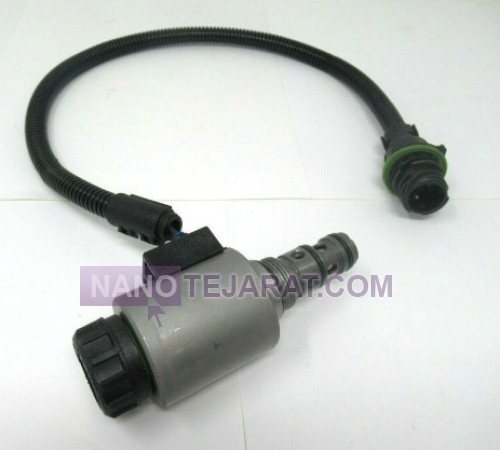
Volvo loader L90 and L120 transmission solenoid , Iran
- Price :To negotiate
- order by whatsapp
The Volvo loader transmission solenoid is a critical electro-hydraulic component responsible for controlling gear engagement and shift timing in models like L90 and L120. It operates by regulating hydraulic pressure between 5 to 18 bar, ensuring smooth gear transitions under variable load conditions. Excessive current beyond 8 A can overheat the solenoid coil, reducing magnetic efficiency and causing delayed or harsh shifts. Contaminated hydraulic fluid with particle sizes above 40 microns accelerates spool sticking and internal leakage, lowering response accuracy by up to 30 percent. Proper torque during mounting, typically 15–18 Nm, is essential to prevent misalignment and uneven wear on the valve body.
Mechanical vibration and thermal cycling are additional factors affecting solenoid longevity, especially under continuous loader operation exceeding 10 hours per day. Coil insulation degradation due to temperatures above 120°C can cause partial short circuits, reducing actuation speed by 25–35 milliseconds. Moisture ingress or poor sealing allows corrosion on the armature and plunger, impairing solenoid stroke consistency. Regular inspection of electrical resistance, typically 2.5–3.0 ohms at 20°C, and fluid cleanliness ensures precise shift timing and maintains transmission efficiency above 95 percent.You can order and buy Volvo loader L90 and L120 transmission solenoid from Iran by contacting us through whatsaap and email.
WEBSITE: Volvo loader L90 and L120 transmission solenoid Iran
Damages caused by failure in volvo loader transmission solenoid
Malfunction of the Volvo loader transmission solenoid causes hydraulic pressure instability and delayed clutch engagement. A voltage drop in the 12 or 24 V circuit can increase actuation time beyond 40 milliseconds. This delay results in harsh shifting and torque shock increases of up to 20 percent. Control pressure deviation outside the 5 to 18 bar range leads to clutch plate slippage and oil temperature rise of about 15°C. Continuous slippage reduces the friction coefficient of clutch discs and shortens service life by approximately 35 percent.
A sticking solenoid spool or internal leakage disrupts proper oil distribution and accelerates wear of planetary gears. Under full load conditions, repeated slippage can reduce power transmission efficiency from 95 percent to nearly 85 percent. Oil temperatures exceeding 110°C accelerate oxidation and decrease viscosity stability. Reduced viscosity lowers hydrodynamic film strength and increases bearing wear by up to 25 percent. Ignoring early solenoid faults may ultimately cause complete transmission failure and significantly higher overhaul costs.