


| Exporter, Wholesale, Manufacturer | |
| Tehran |  |
| +989122003350 | |

- Price :negotiated
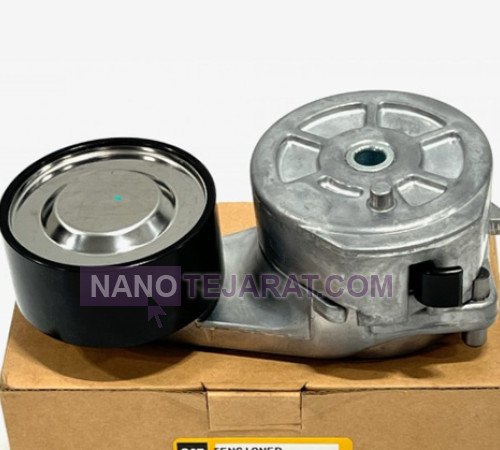
Volvo loader pully tensioner , Iran
The pulley with base for the VOLVO L90 and L120 loader is a critical component in transferring engine power to the hydraulic pump and auxiliary systems. This pulley is made of alloy steel with a surface hardness of 48–52 HRC, and its diameter ranges from 120 to 180 millimeters. It is mounted on the engine shaft using M12 class 10.9 bolts, with a center-to-center V-belt groove distance of approximately 65 millimeters. Its function is to transmit torque to the hydraulic pump and alternator with over 95% efficiency, while reducing system vibration and noise. The pulley grooves are designed at a 34-degree angle to optimize belt contact and ensure a service life exceeding 8,000 operating hours.
The pulley assembly consists of a steel core, an inner bushing with wear-resistant coating, and precisely shaped belt grooves. The pulley base attaches to the engine block via four M12 bolts and steel washers. The inner bushing, 40 millimeters in diameter and 8 millimeters thick, ensures shaft alignment and reduces metallurgical fatigue. Lubrication with NLGI 2 grease lowers friction at the pulley-belt interface to below 0.12. Precise shaft and pulley design maintain radial stress under 250 MPa and a fatigue life exceeding 10^7 cycles under full-load continuous operation.You can order and buy Volvo loader pully tensioner from Iran by contacting us through whatsaap and email.
WEBSITE: Volvo loader pully tensioner Iran
Reasons and signs of pully tensioner faliure
Malfunction of the VOLVO loader pulley tensioner is often indicated by abnormal noises such as squealing or whining in the 1,000–2,500 Hz range. A belt tension reduction exceeding 15% causes slippage and decreases power transmission efficiency to the hydraulic pump and alternator. Vibrations above 0.8 millimeters per 10,000 shaft rotations indicate bearing wear or pulley groove deformation. Loosened M12 bolts or a groove angle deviation greater than 2 degrees increases belt wear and reduces output by up to 12%. Surface cracks or wear deeper than 0.3 millimeters can lead to sudden pulley failure under full-load conditions.
Other signs of malfunction include pulley temperatures exceeding 75°C during continuous operation and inner bushing deformation over 0.1 millimeter. A knocking or impact noise at engine startup typically indicates shaft misalignment. Belt life reduction from 8,000 operating hours to below 5,500 hours results from uneven radial load and friction exceeding 0.18. Any unwanted vibration above 1.2 millimeters or shaft displacement over 0.15 millimeter should be immediately inspected to prevent complete system failure.
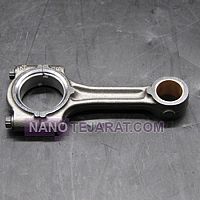
Volvo loader L90 and L120 connecting rod
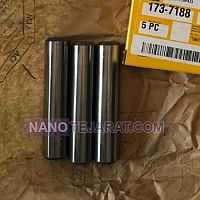
Volvo L90 and L120 valve guide
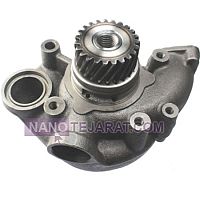
Volvo loader L90 and L120 water pump
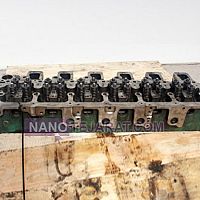
Volvo loader L90 and L120 stock cylinder head
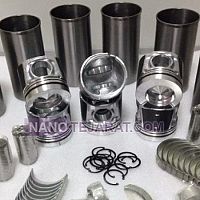
Volvo loader L90 and L120 liner kit
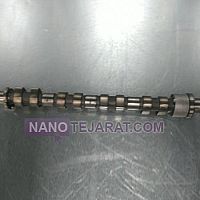
Volvo L90-L120 and L180 loader camshaft
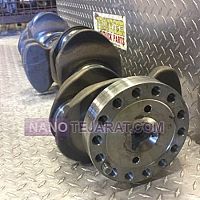
Volvo loader L90 and L120 crankshaft
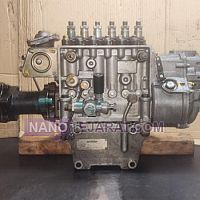
Volvo loader L90 and L120 injection pump
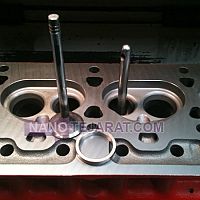
Volvo loader L90 and L120 engine valve
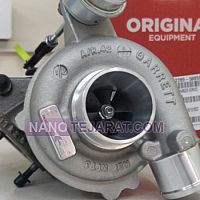
Volvo Loader L90 and L120 turbocharger