Rail Iran
Cellphone / Whatsapp: +989122003350
| rahmati-co |
| Iran |
| 09121933785 |
rail nut
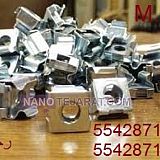
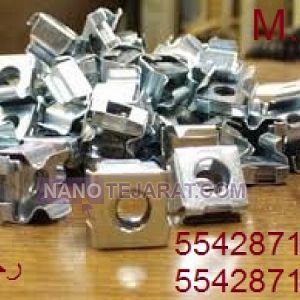
The rail nut features a rectangular body with two symmetrical side wings on both sides. These side wings exactly match the internal T-shaped groove of the rail for controlled sliding movement. The rail nut height ranges from 6 to 24 millimeters depending on the rail size. Wing width varies between 8 and 32 millimeters with each wing thickness of 2 to 5 millimeters. The central internal metric thread with sizes M4 to M20 is positioned perpendicular to the nut surface. Thread pitch is selected according to coarse or fine thread series based on application requirements. A 15 to 20 degree angle on the upper edges of wings provides better locking inside the rail groove. Dimensional tolerances for these nuts are manufactured in class h11 for length and width and class h13 for height.
Rail nuts are manufactured from medium carbon steel with property class 8.8 or 10.9 strength grades. Hardening and tempering heat treatment produces surface hardness of 28 to 32 Rockwell C. White or yellow galvanized coating with 8 to 12 microns thickness provides corrosion resistance. Stainless steel grades A2 and A4 are also produced for wet and marine corrosive environments. The spring rail nut features a spring steel sheet with 0.5 to 1 millimeter thickness positioned under the wings. This spring sh
 | |
| rahmati-co | 09121933785 |
| Atrinelevator |
| Iran |
| 021-88425461 |
elevator rail
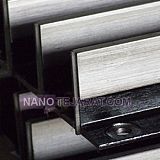
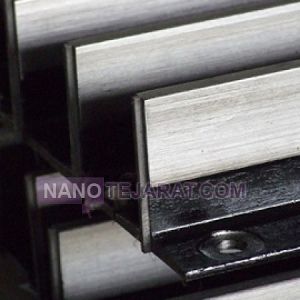
Elevator guide rails are manufactured from carbon steel grade DIN 1629 St 52.0 or equivalent per ASTM A36. The standard profile is an inverted T-shape with dimensional accuracy of ±0.15 mm and straightness under 0.5 mm per meter. Rail lengths are 5 meters cuttable and connectable up to 25 meters with linear weight of 10 to 40 kg per meter. Surface hardness is maintained at 140–180 Brinell HB for wear and fatigue deformation resistance. Maximum permissible deviation over 5 meters is 0.7 mm with local curvature below 0.25 mm per meter. These rails undergo controlled stress-relieving heat treatment and cold polishing to reduce residual stresses and extend service life.
The guide shoe contact surface is precision cold-drawn to a surface roughness of Ra 0.8 microns and coated with hard chromium. Rail joints use 15 mm steel plates with four to six Grade 12.9 bolts tightened to 450-500 Nm torque. Hot-dip galvanized coating 85 microns or electrostatic epoxy coating 70 microns is applied for corrosive and humid environments. Bending strength ranges from 350 to 1100 MPa with ultimate tensile strength of 450–550 MPa. Rails are designed to withstand dynamic loads up to 300% of rated load, vertical accelerations up to 3.5 m/s², and lateral forces up to 150 kN. Production and testing
 | |
| Atrinelevator | 021-88425461 |
| behranlift |
| Iran |
| 021-87162000 |
elevator rail
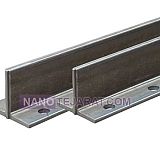
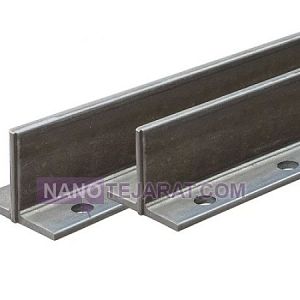
Elevator guide rails are manufactured from low-carbon steel grade KP80 per JIS G3101 with minimum yield strength of 360 MPa. The standard profile is an inverted T-shape with dimensional accuracy of ±0.2 mm and angular tolerance of ±0.3 degrees. Standard rail length is 5 meters seamlessly connectable up to 15 meters with linear weight of 12 to 40 kg per meter. Surface hardness is maintained at 140–170 Brinell HB for wear and deformation resistance. Maximum permissible deviation over 5 meters is 0.8 mm with local curvature below 0.3 mm per meter. These rails undergo controlled stress-relief heat treatment at 550°C to prevent installation warping.
The running surface for guide shoes is cold-drawn to a surface quality of Ra 1.2 microns with edge radii of 1.5 mm. Rail joints use 12 mm steel plates with four Grade 10.9 bolts tightened to 400 Nm torque. Hot-dip galvanized coating 80 microns or 70-micron electrostatic epoxy powder coating is applied for corrosive environments. Bending moment capacity ranges from 15 to 70 kN·m with torsional resistance up to 1000 Nm per meter. Rails are designed to withstand dynamic loads up to 200% of rated load and vertical speeds up to 12.5 m/s. Production complies with EN 81-20, ISO 7465, and GB/T 10054-2021 standards for safety and durabilit
 | |
| behranlift | 021-87162000 |
| behranlift |
| Iran |
| 021-87162000 |
Rail Lift
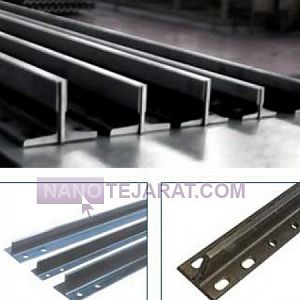
Elevator guide rails are manufactured from low-carbon steel grade Q235B or KP80 per GB/T 700 and JIS A 5505 standards. The standard profile is an inverted T-shape with dimensional accuracy of ±0.3 mm and angular tolerance of ±0.5 degrees. Rail lengths are 5 meters connectable up to 20 meters with linear weight of 10 to 45 kg per meter. Surface hardness is maintained at 130–170 Brinell HB for wear resistance and deformation prevention. Maximum permissible deviation over 5 meters is 1.2 mm with local curvature below 0.3 mm per meter. These rails undergo stress-relief heat treatment at 550°C to prevent deformation from residual stresses.
The running surface for guide shoes is cold-drawn to a surface quality of Ra 2 microns with edge radii of 2.5 mm. Rail joints use 12 mm steel plates with four to six Grade 10.9 bolts tightened to 400 Nm torque. Hot-dip galvanized coating 75 microns or 65-micron catalytic epoxy coating is provided for high-humidity environments. Bending moment capacity ranges from 15 to 70 kN·m with torsional resistance up to 900 Nm per meter. Rails are designed to withstand dynamic loads up to 200% of rated load and vertical speeds up to 12 m/s. Production complies with EN 81-20/50, ISO 7465, and GOST 51616 standards for safety and durability assurance.
 | |
| behranlift | 021-87162000 |
| aranasansor |
| Iran |
| 021-44488073 |
elevator rail
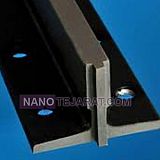
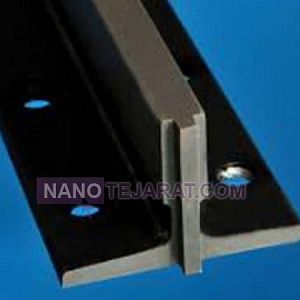
Elevator guide rails are manufactured from low-carbon steel grade Q235B or ST52 per JIS G3101 and DIN 17100 standards. The standard profile is an inverted T-shape with dimensional accuracy of ±0.25 mm. Rail lengths are 5 meters connectable up to 15 meters with linear weight of 10 to 40 kg per meter. Surface hardness is maintained at 140–180 Brinell HB for wear and deformation resistance. Maximum permissible deviation over 5 meters is 1 mm with local curvature below 0.2 mm per meter. These rails undergo normalization heat treatment for dimensional stability in temperatures from –50°C to +200°C.
The guide shoe contact surface is cold-drawn to a surface roughness of Ra 1.6 microns. Rail joints use 15 mm steel plates with 4 to 6 Grade 10.9 bolts tightened to 450 Nm torque. Hot-dip galvanized coating 80 microns or 70-micron electrostatic epoxy powder coating is applied for corrosive environments. Bending strength ranges from 350 to 1100 MPa with ultimate tensile strength of 450–600 MPa. Rails are designed to withstand dynamic loads up to 200% of rated load and vertical accelerations up to 3.5 m/s². Production complies with EN 81-20/50, ISO 7465, and GB/T 10054-2020 standards for safety and flawless performance.
 | |
| aranasansor | 021-44488073 |
| aranasansor |
| Iran |
| 021-44488073 |
elevator rail
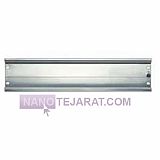
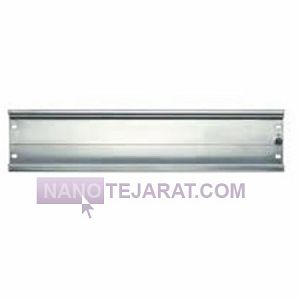
Elevator guide rails are manufactured from low-carbon steel grade Q235B or ST52 per JIS G3101 and DIN 17100 standards. The standard profile is an inverted T-shape with dimensional accuracy of ±0.25 mm. Rail lengths are 5 meters connectable up to 15 meters with linear weight of 10 to 40 kg per meter. Surface hardness is maintained at 140–180 Brinell HB for wear and deformation resistance. Maximum permissible deviation over 5 meters is 1 mm with local curvature below 0.2 mm per meter. These rails undergo normalization heat treatment for dimensional stability in temperatures from –50°C to +200°C.
The guide shoe contact surface is cold-drawn to a surface roughness of Ra 1.6 microns. Rail joints use 15 mm steel plates with 4 to 6 Grade 10.9 bolts tightened to 450 Nm torque. Hot-dip galvanized coating 80 microns or 70-micron electrostatic epoxy powder coating is applied for corrosive environments. Bending strength ranges from 350 to 1100 MPa with ultimate tensile strength of 450–600 MPa. Rails are designed to withstand dynamic loads up to 200% of rated load and vertical accelerations up to 3.5 m/s². Production complies with EN 81-20/50, ISO 7465, and GB/T 10054-2020 standards for safety and flawless performance.
 | |
| aranasansor | 021-44488073 |
| Atrinelevator |
| Iran |
| 021-88425461 |
Rail Lift
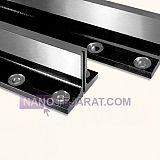
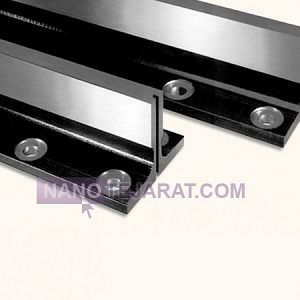
Elevator guide rails are manufactured from low-carbon steel grade Q235B or A36 per ASTM A36/EN 10025 standards. The rail profile is an inverted T-shape with dimensional accuracy of ±0.3 mm and standard lengths of 5 meters. Linear weight ranges from 8 to 25 kg/m with flange thickness varying from 5 to 12 mm. Surface hardness is maintained at 130–170 Brinell HB for enhanced wear resistance. Maximum permissible deviation over 5 meters is 1 mm with angular tolerance of ±0.5 degrees. These rails undergo thermal normalization for uniform crystalline structure and internal stress reduction.
The contact surface with car guide shoes is cold-rolled to a surface roughness of Ra 1.6 microns. Rail joints use steel couplers and four Grade 10.9 bolts with tightening torque of 300–500 Nm. Hot-dip galvanized coating minimum 80 microns or epoxy powder coating 60 microns provides corrosion protection. Bending capacity ranges from 250 to 900 MPa with ultimate tensile strength of 370–500 MPa. Rails are designed to withstand dynamic loads up to 200% of rated load and vertical accelerations up to 2.5 m/s². Production complies with EN 81-20/50, ISO 7465, and GB/T 10054 standards for safety and flawless performance.
 | |
| Atrinelevator | 021-88425461 |
| faraz-andish |
| Iran |
| 021-66570886 |
elevator rail
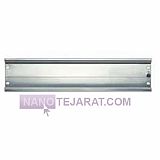
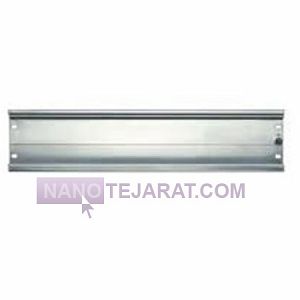
Elevator guide rails are manufactured from low-carbon steel grade Q235B or A36 per ASTM A36/EN 10025 standards. The rail profile is an inverted T-shape with dimensional accuracy of ±0.3 mm and standard lengths of 5 meters. Linear weight ranges from 8 to 25 kg/m with flange thickness varying from 5 to 12 mm. Surface hardness is maintained at 130–170 Brinell HB for enhanced wear resistance. Maximum permissible deviation over 5 meters is 1 mm with angular tolerance of ±0.5 degrees. These rails undergo thermal normalization for uniform crystalline structure and internal stress reduction.
The contact surface with car guide shoes is cold-rolled to a surface roughness of Ra 1.6 microns. Rail joints use steel couplers and four Grade 10.9 bolts with tightening torque of 300–500 Nm. Hot-dip galvanized coating minimum 80 microns or epoxy powder coating 60 microns provides corrosion protection. Bending capacity ranges from 250 to 900 MPa with ultimate tensile strength of 370–500 MPa. Rails are designed to withstand dynamic loads up to 200% of rated load and vertical accelerations up to 2.5 m/s². Production complies with EN 81-20/50, ISO 7465, and GB/T 10054 standards for safety and flawless performance.
 | |
| faraz-andish | 021-66570886 |
| sahandelvtr |
| Iran |
| 021-88414621 |
elevator rail
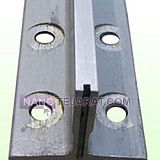
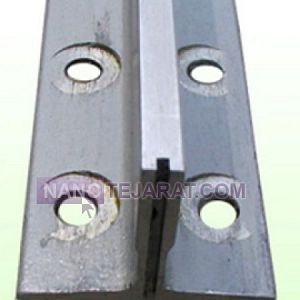
Elevator guide rails are manufactured from low-carbon steel grade Q235B per GB/T 700 or equivalent. The standard profile is an inverted T-shape with dimensional accuracy of ±0.2 mm. Rail lengths are 5 meters connectable up to 20 meters with linear weight of 8 to 30 kg per meter. Surface hardness is maintained at 130–160 Brinell HB for wear and deformation resistance. Maximum permissible deviation over 5 meters is 0.8 mm with local curvature below 0.3 mm per meter. These rails undergo stress-relieving heat treatment for dimensional stability in temperatures from –40°C to +80°C.
The guide shoe contact surface is cold-drawn to a surface roughness of Ra 1.2 microns. Rail joints use 12 mm steel plates with four Grade 10.9 bolts tightened to 400 Nm torque. Hot-dip galvanized coating 75 microns or electrostatic epoxy coating 60 microns is applied for corrosive environments. Bending strength ranges from 300 to 950 MPa with ultimate tensile strength of 410–520 MPa. Rails are designed to withstand dynamic loads up to 250% of rated load and vertical accelerations up to 3 m/s². Production complies with EN 81-20/50, ISO 7465, and GB/T 10054-2014 standards for safety and flawless performance.
 | |
| sahandelvtr | 021-88414621 |
| ravilift |
| Iran |
| 021-66653422 |
elevator rail
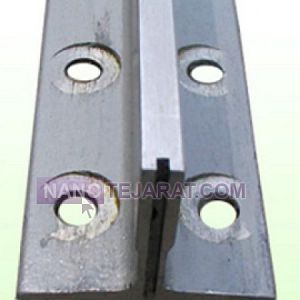
Elevator guide rails are manufactured from low-carbon steel grade Q235B per GB/T 700 or equivalent. The standard profile is an inverted T-shape with dimensional accuracy of ±0.2 mm. Rail lengths are 5 meters connectable up to 20 meters with linear weight of 8 to 30 kg per meter. Surface hardness is maintained at 130–160 Brinell HB for wear and deformation resistance. Maximum permissible deviation over 5 meters is 0.8 mm with local curvature below 0.3 mm per meter. These rails undergo stress-relieving heat treatment for dimensional stability in temperatures from –40°C to +80°C.
The guide shoe contact surface is cold-drawn to a surface roughness of Ra 1.2 microns. Rail joints use 12 mm steel plates with four Grade 10.9 bolts tightened to 400 Nm torque. Hot-dip galvanized coating 75 microns or electrostatic epoxy coating 60 microns is applied for corrosive environments. Bending strength ranges from 300 to 950 MPa with ultimate tensile strength of 410–520 MPa. Rails are designed to withstand dynamic loads up to 250% of rated load and vertical accelerations up to 3 m/s². Production complies with EN 81-20/50, ISO 7465, and GB/T 10054-2014 standards for safety and flawless performance.
 | |
| ravilift | 021-66653422 |
| saman-faraz |
| Iran |
| 021-55276985 |
elevator rail
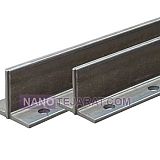
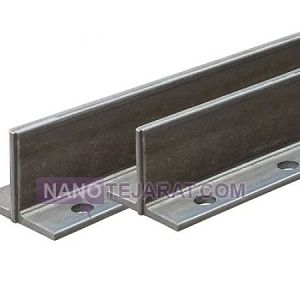
Elevator guide rails are manufactured from fine-grained non-alloy carbon steel per DIN EN 10025-2. The common grade is S355JR with a minimum yield strength of 355 MPa. Rail surfaces undergo a hardening process to achieve a hardness of 149 to 197 Brinell. The dimensional tolerance of the T-type profile, according to EN 81-20, is maintained within ±0.25 mm. The standard length per rail section is 5 meters, with production possible up to 8 meters. Rails are joined using steel fishplates and hot-dip galvanized grade 8.8 bolts. The total vertical alignment accuracy in the hoistway must not exceed 10 mm per 30 meters.
The rail profile is designed as a broad-based T-shape. This shape provides maximum bending resistance and stability against lateral forces. The contact surface for the guide shoes is finished to a surface roughness Ra below 3.2 µm. This reduces the coefficient of friction and enables silent travel. Rails are protected against corrosion by zinc flake coating or hot-dip galvanization. The protective coating thickness varies between 45 and 85 microns. The rails temperature tolerance is defined for -20 to +120 °C without deformation. Their fire resistance complies with class A1 DIN 4102.
 | |
| saman-faraz | 021-55276985 |
| saman-faraz |
| Iran |
| 021-55276985 |
elevator rail
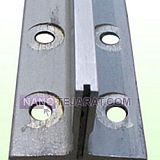
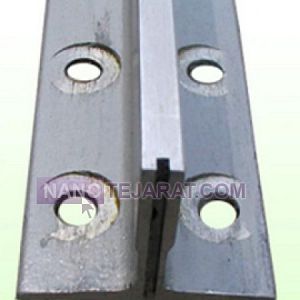
Elevator guide rails are manufactured from cold-drawn low-carbon steel with a minimum yield strength of 370 MPa. The standard profile is a T-section with precise dimensions per DIN EN 81-20. Common rail heights range from 89 to 152 millimeters. Standard rail length is 5 meters per section with a length tolerance of ±0.5 mm. Surface hardness is optimized between 150 to 190 Brinell for wear resistance. The contact surface for guide shoes is finely machined to under 3 microns roughness. Hot-dip galvanizing or thick epoxy coating provides corrosion protection for over 480 hours in salt spray tests.
The rail structure is engineered to withstand complex dynamic and static loads. The section moment of inertia ranges from 85 to 480 cm⁴ depending on rail size. These rails guarantee a deflection of less than 5 mm per 3000 mm of height. Rails are joined using steel fishplates and Grade 8.8 bolts torqued precisely to 220 Nm. An automatic leveling system during installation achieves alignment accuracy within ±0.7 mm. The rails remain dimensionally stable under thermal deformation up to 150°C. A specialized back design enables vibration damping and reduces acoustic noise below 45 dB.
 | |
| saman-faraz | 021-55276985 |
| ravilift |
| Iran |
| 021-66653422 |
Rail Lift
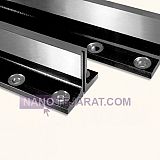
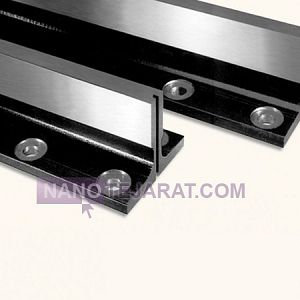
Elevator guide rails are manufactured from low-carbon steel grade KP80 or KP100 per JIS A 5505 standard. The standard profile is an inverted T-shape with dimensional accuracy of ±0.5 mm. Rail lengths are 5 meters connectable up to 10 meters with linear weight of 8 to 30 kg per meter. Surface hardness is maintained at 120–160 Brinell HB for wear and deformation resistance. Maximum permissible deviation over 5 meters is 1.5 mm with local curvature below 0.5 mm per meter. These rails undergo stress-relieving heat treatment for dimensional stability in temperatures from –40°C to +150°C.
The guide shoe contact surface is mechanically finished to a surface roughness of Ra 3.2 microns. Rail joints use 12 mm steel plates with 4 to 6 Grade 8.8 bolts tightened to 300 Nm torque. Hot-dip galvanized coating 85 microns or catalytic epoxy coating is applied for humid environments. Bending resistance capacity ranges from 200 to 800 N/mm² depending on profile design. Rails are designed to withstand dynamic loads up to 150% of rated car and counterweight loads. Production complies with EN 81-20/50, ISO 7465, and GOST 51616 standards for safety and durability.
 | |
| ravilift | 021-66653422 |
| dizel-part |
| Iran |
| 021-55410365 |
trailer control valve
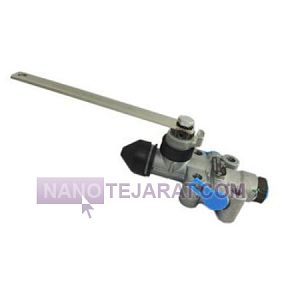
The trailer valve, or Emergency Shut-off Valve, is constructed from A356-T6 aluminum alloy or carbon steel. It is designed for a working pressure of 250 PSI approximately 17 bar. The connection diameter is typically 2 or 3 inches with NPT or ACME threaded standards. Its full closure time under nominal pressure is less than 3 seconds. The primary seal uses a resistant elastomer like Viton or EPDM with a -40°C to +120°C operating range. The valve features a manual activation mechanism and a pneumatic actuator requiring minimum 60 PSI air pressure. Its hydrostatic testing complies with DOT-406 standard at 375 PSI.
The internal structure features an axial shut-off disc with a 304 stainless steel stem. The required force for manual activation is under 150 Newtons. The valve body includes a chamber for installing a position switch. This switch transmits the open/closed status signal to the cabin. All wetted parts are resistant to petroleum-based products. The valve has a minimum IP67 rating against water and dust ingress. This design allows rapid isolation of the cargo tank from the vessel in emergencies and complies with DOT and ADR regulations.
 | |
| dizel-part | 021-55410365 |
| Masaeli-Industrial-Machinery- |
| Iran |
| 031-35723006 |
Industrial Rail Sealing Machine
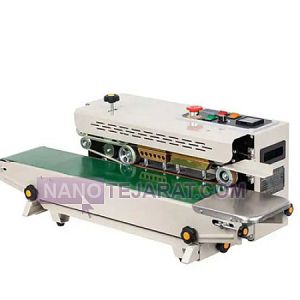
The rail sealing machine features a ST52 steel chassis with 80-micron electrostatic powder coating. Standard dimensions are 1800 x 800 x 1600 mm with a net weight of 280 kg. It utilizes a 3 kW servo motor with a precision positioning controller ±0.1 mm accuracy. Sealing speed is adjustable from 0 to 200 packages per minute via variable frequency drive. The thermal system employs a 1000W ceramic heater with PID control and 50-300°C operating range. It can seal polyethylene, polypropylene, and multilayer materials with 0.03-0.35 mm thickness.
The mechanical structure includes two parallel rails made of 6061-T6 aluminum with 25-micron hard anodized coating. Effective rail length is modularly expandable from 600 to 2000 mm. The pressure system is pneumatic with an 80 mm cylinder and 0.2-0.8 MPa working pressure. A 7-inch touchscreen HMI allows programming of 99 different sealing profiles. Power consumption is 4 kW per hour with three-phase 380V 50/60 Hz input. Sealing position repeatability is under 0.3 mm using a 2000 PPR optical encoder. All components comply with CE safety and IP65 standards for industrial environments.

 | |
| Masaeli-Industrial-Machinery- | 031-35723006 |