
| Exporter, Wholesale, Manufacturer | |
| Tehran_North |  |
| +989122003350 | |

- Price :negotiated
elevator rail , Iran
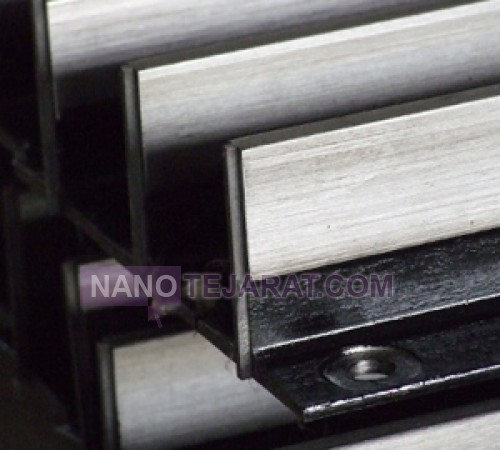
Elevator guide rails are manufactured from carbon steel grade DIN 1629 St 52.0 or equivalent per ASTM A36. The standard profile is an inverted T-shape with dimensional accuracy of ±0.15 mm and straightness under 0.5 mm per meter. Rail lengths are 5 meters cuttable and connectable up to 25 meters with linear weight of 10 to 40 kg per meter. Surface hardness is maintained at 140–180 Brinell HB for wear and fatigue deformation resistance. Maximum permissible deviation over 5 meters is 0.7 mm with local curvature below 0.25 mm per meter. These rails undergo controlled stress-relieving heat treatment and cold polishing to reduce residual stresses and extend service life.
The guide shoe contact surface is precision cold-drawn to a surface roughness of Ra 0.8 microns and coated with hard chromium. Rail joints use 15 mm steel plates with four to six Grade 12.9 bolts tightened to 450-500 Nm torque. Hot-dip galvanized coating 85 microns or electrostatic epoxy coating 70 microns is applied for corrosive and humid environments. Bending strength ranges from 350 to 1100 MPa with ultimate tensile strength of 450–550 MPa. Rails are designed to withstand dynamic loads up to 300% of rated load, vertical accelerations up to 3.5 m/s², and lateral forces up to 150 kN. Production and testing comply with EN 81-20/50, ISO 7465:2007, and GOST 51616 standards for safety and flawless performance.You can order and buy elevator rail from Iran by contacting us through whatsaap and email.
WEBSITE: elevator rail Iran
Common Elevator Motor Problems
The most frequent elevator motor issues include overheating and abnormal vibration. Excessive heat often stems from continuous overload, cooling system failure, or faulty windings. Vibration and loud noises typically indicate shaft misalignment, bearing wear, or loose connections. Sudden stops can be caused by drive malfunction, sensor errors, or thermal cutoff. Reduced speed or improper acceleration is often related to incorrect drive settings or voltage drop. In hydraulic motors, low oil pressure or fluid leakage are common problems. Accurate troubleshooting requires inspection of electrical, mechanical, and hydraulic systems by a qualified technician.
Elevator

Lift engine
Elevator
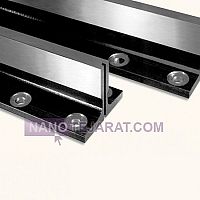
Rail Lift
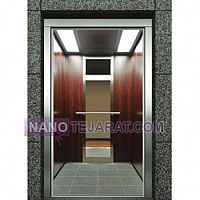
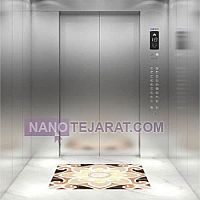
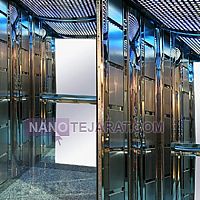
elevator cabin
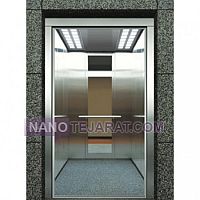
elevator cabin
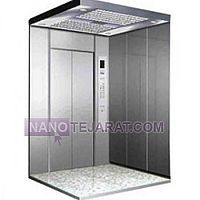
Elevator cabin
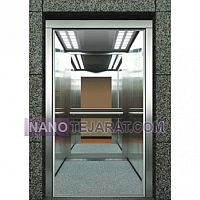
elevator cabin
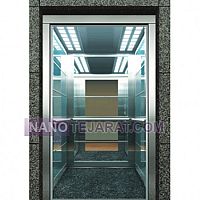
elevator cabin
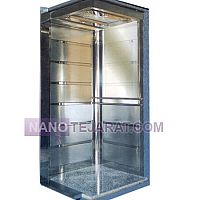
Cabin