Milling Machines Iran
Cellphone / Whatsapp: +989122003350
| aghajanico |
| Iran |
| 021-66820953 |
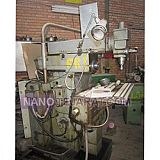
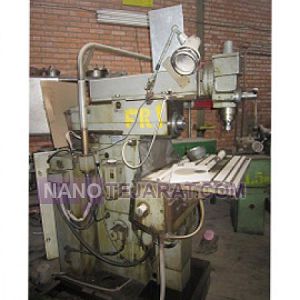
milling machines
A milling machine is a multi axis machine tool used for precision removal of material from flat surfaces, slots, and complex metal profiles. Main motor power typically ranges from 2 to 22 kilowatts with output torque up to 150 newton meters. Spindle speed varies between 60 and 10000 rpm and is controlled by inverter or servo systems. Axis travels for X, Y, and Z are defined between 400 to 1600, 200 to 800, and 300 to 700 millimeters respectively. Positioning accuracy in CNC models reaches ±0.008 millimeter with repeatability of ±0.005 millimeter. Maximum table load capacity ranges from 250 to 1500 kilograms.
The machine structure is manufactured from ductile cast iron with stress relief treatment and hardness above 180 Brinell. Linear guideways of class H with clearance below 0.01 millimeter and ball screws with 5 or 10 millimeter pitch are applied. Coolant systems provide flow rates between 20 and 60 liters per minute for thermal control. The spindle taper is commonly BT40 or ISO50 with radial runout below 0.004 millimeter. Automatic tool changer capacity ranges from 16 to 40 tools. Quality control includes geometric inspection, backlash testing, and surface roughness measurement down to 0.8 micrometers Ra.
 | |
| aghajanico | 021-66820953 |
| aghajanico |
| Iran |
| 021-66820953 |
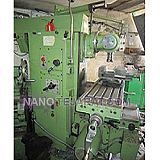
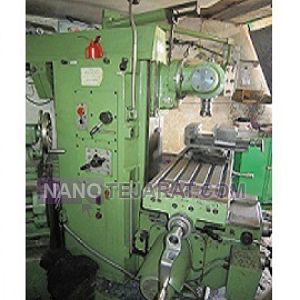
milling machines
A milling machine is a metal cutting machine tool that performs precision machining through spindle rotation and controlled axis movements. Main motor power typically ranges from 1.5 to 15 kilowatts, and spindle speed is adjustable between 100 and 8000 rpm. X axis travel varies from 300 to 1500 millimeters with positioning accuracy up to ±0.01 millimeter. The spindle taper is commonly ISO 40 or BT40 with axial runout below 0.005 millimeter. Table feed rate can range from 50 to 5000 millimeters per minute. The cast iron structure is engineered with high vibration damping to minimize geometric error.
The machine structure includes a monolithic gray cast iron frame, linear guideways or dovetail slides, and automatic lubrication system. CNC models employ numerical controllers with repeatability of ±0.005 millimeter. The spindle is assembled with P4 class angular contact bearings and maximum radial runout of 0.003 millimeter. Automatic tool changers provide capacity for 12 to 30 tools. Achievable material removal rate may reach 300 cubic centimeters per minute depending on workpiece material. Accuracy validation includes ballbar testing and surface roughness measurement down to 1.6 micrometers Ra.
 | |
| aghajanico | 021-66820953 |
| aghajanico |
| Iran |
| 021-66820953 |
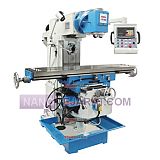
milling machines
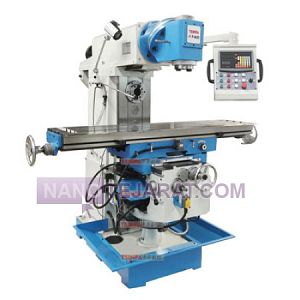
A conventional milling machine is a manual knee type machine tool designed for metal cutting with mechanical control. Main motor power typically ranges from 1.1 to 5.5 kilowatts, and spindle speed varies between 80 and 3000 rpm. Speed adjustment is achieved through a stepped gearbox or belt pulley system. X axis travel ranges from 500 to 1000 millimeters with manual positioning accuracy of approximately ±0.02 millimeter. The spindle taper is commonly ISO40 with axial runout below 0.01 millimeter. Maximum table load capacity is generally between 200 and 600 kilograms.
The structure consists of a gray cast iron body with hardness above 170 Brinell and a stress relieved monolithic column. Motion guideways are ground dovetail slides with adjustable clearance below 0.02 millimeter. Table feed can be manual or powered by a 0.75 kilowatt feed motor. Feed rate range is defined between 20 and 800 millimeters per minute. A coolant system with 25 liter per minute pump is installed to extend tool life. Accuracy testing includes surface roughness down to 1.6 micrometers Ra and spindle perpendicularity deviation below 0.02 millimeter over 300 millimeters.
 | |
| aghajanico | 021-66820953 |
| aghajanico |
| Iran |
| 021-66820953 |
milling machines
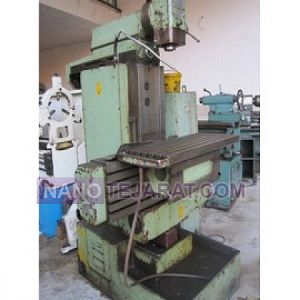
A conventional milling machine is a manual knee type machine tool used for machining flat surfaces, slots, and gears with direct operator control. Main motor power typically ranges from 1.5 to 7.5 kilowatts with spindle torque up to 90 newton meters. Spindle speed varies between 70 and 4000 rpm with gear driven transmission. X axis travel ranges from 600 to 1200 millimeters and Y axis travel from 250 to 400 millimeters. Handwheel graduation accuracy is 0.02 millimeter with minimum scale reading of 0.01 millimeter. The spindle taper is commonly ISO40 or MT4 with radial runout below 0.01 millimeter.
The structure is manufactured from GG25 gray cast iron with stress relief treatment and hardness above 180 Brinell. Ground dovetail guideways allow clearance adjustment below 0.015 millimeter. Longitudinal and cross feeds may be manual or powered by 0.75 to 1.1 kilowatt motors. Automatic feed rate ranges from 25 to 900 millimeters per minute. Table load capacity is typically between 250 and 800 kilograms. Quality inspection includes spindle concentricity below 0.02 millimeter and surface finish capability down to 1.6 micrometers Ra.
 | |
| aghajanico | 021-66820953 |
| aghajanico |
| Iran |
| 021-66820953 |
milling machines
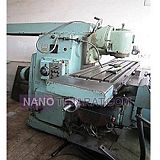
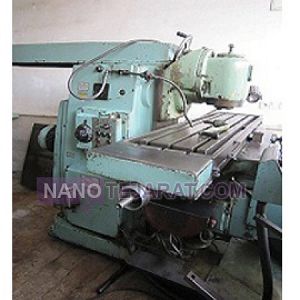
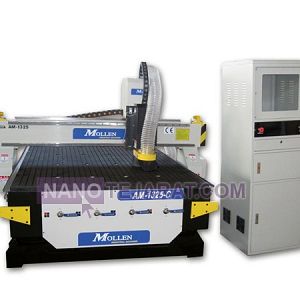
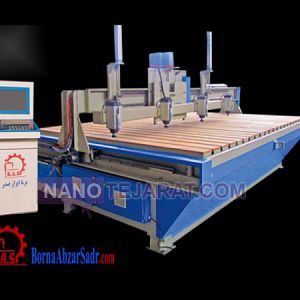
A milling machine is a metal cutting machine tool used for machining flat surfaces, slots, and complex components. Main motor power typically ranges from 2 to 15 kilowatts, and spindle speed is adjustable between 50 and 6000 revolutions per minute. Spindle taper is commonly selected according to ISO 40 or ISO 50 standards. Positioning accuracy in CNC models is maintained within ±0.01 millimeters. X axis travel ranges from 300 to 1500 millimeters. Maximum spindle torque can reach between 100 and 500 newton meters.
The structure consists of a cast iron frame with tensile strength above 250 megapascals and a worktable equipped with standard T slots. Machine weight varies from 800 to 8000 kilograms depending on size. Feed system may be manual, semi automatic, or CNC driven by servo motors rated from 1 to 5 kilowatts. A coolant system with pump power between 0.1 and 0.5 kilowatts reduces tool temperature. Achievable surface roughness under optimal conditions can be below 1.6 micrometers Ra. Accuracy testing includes spindle runout evaluation and axis backlash measurement.
 | |
| aghajanico | 021-66820953 |
| alborz-abzar |
| Iran |
| 021-66731255 |
 | |
| alborz-abzar | 021-66731255 |
| bornaabzar |
| Iran |
| 021-66550710 |
 | |
| bornaabzar | 021-66550710 |
| bornaabzar |
| Iran |
| 021-66550710 |
 | |
| bornaabzar | 021-66550710 |
| bornaabzar |
| Iran |
| 021-66550710 |
 | |
| bornaabzar | 021-66550710 |