| Exporter, Wholesale, Manufacturer | |
| Isfahan |  |
| +989122003350 | |

- Price :negotiated
press clamping fitting , Iran
- Price :To negotiate
- order by whatsapp
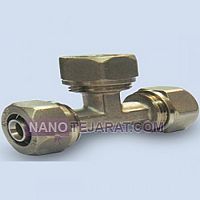
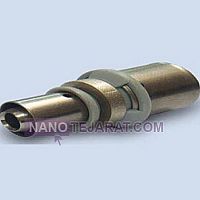
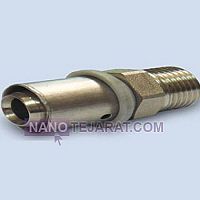
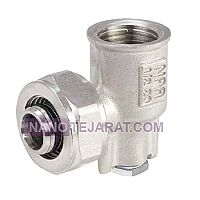
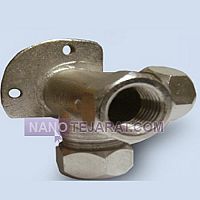
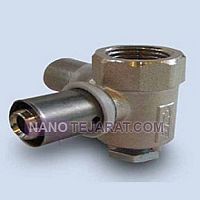
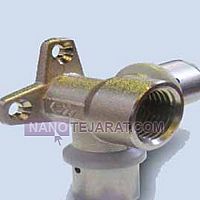
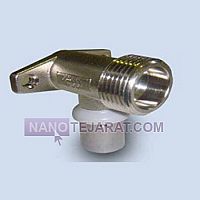
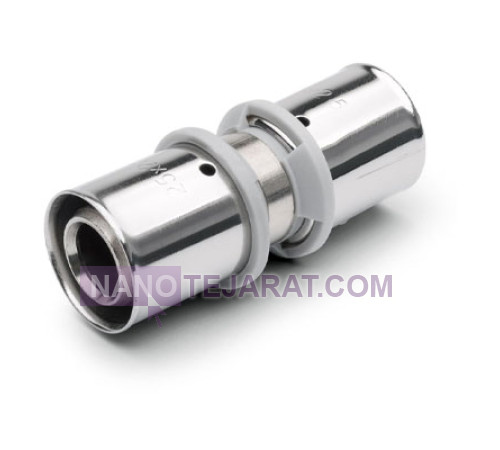
A press coupling is a straight connector used to join two pipes of equal diameter in cold and hot water systems. The body is manufactured from low lead forged brass with tensile strength between 350 and 500 megapascals. Nominal working pressure ranges from 10 to 16 bar, with test pressure up to 24 bar. Common sizes include 16, 20, 25, and 32 millimeters. Operating temperature ranges from 0 to 95 degrees Celsius with peak tolerance up to 110 degrees Celsius. The internal hydraulic design ensures pressure drop below 0.15 bar at nominal flow rate.
The structure includes two press sockets with stainless steel sleeves and heat resistant EPDM O rings. Body wall thickness ranges from 3 to 6 millimeters to withstand internal pressure stress. Sealing is achieved through controlled pipe deformation and uniform O ring compression. Dimensional tolerance in the press area is maintained below ±0.05 millimeter. Nickel plating thickness from 8 to 20 microns enhances corrosion resistance. Quality control includes hydrostatic testing, pull out resistance testing of press joints, and precise dimensional inspection.You can order and buy press clamping fitting from Iran by contacting us through whatsaap and email.
WEBSITE: press clamping fitting Iran
Buying Guide for High-Quality Press Couplings in iran
A buying guide for high-quality press couplings should be based on technical parameters, construction material, implementation standards, and operating conditions. First, accurately determine the nominal pipe sizes in millimeters to ensure the coupling fits both internal and external diameters. Choose coupling material according to the working environment CW617N brass is suitable for potable water and general plumbing, while stainless steel 304/316 is recommended for corrosive and industrial environments. Pay attention to allowable working pressure bar and operating temperature degrees Celsius to match the system design range. Ensure the product has international certifications such as ISO 21003, DIN EN 1254, and valid press/joint standards. Final sealing quality depends on O-ring design, internal surface finish, and dimensional precision. Selecting a reputable supplier and checking warranties can reduce the risk of poor performance.