Spring Iran
Cellphone / Whatsapp: +989122003350
| sayalsanat |
| Iran |
| 021-22087856 |
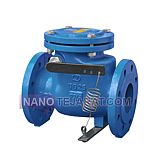
Vogiran anti-water hammer spring check valve PN16
The Vogiran anti-water hammer spring check valve PN16 is designed with a compact ductile iron GGG40 body, rated for a nominal pressure of 16 bar. It features a stainless steel spring-loaded disc mechanism that responds instantly to flow changes, closing smoothly to prevent water hammer effects. Internal components, including the disc, spring, and seat, are made of stainless steel to ensure corrosion resistance and durability at temperatures from 0°C to 200°C. The sealing interface utilizes EPDM or NBR elastomers for complete backflow prevention. Designed according to DIN 3202 and EN 12334 standards, it is suitable for horizontal and vertical installations in systems carrying water, air, or light oil.
Depending on the nominal diameter DN50–DN200, the valve weight ranges from 7 to 50 kilograms, with flanges built per EN1092-2 standards. The aerodynamic flow path minimizes pressure loss and provides silent, vibration-free operation. Its interior epoxy coating offers excellent resistance to corrosion, extending the valve’s lifespan in humid environments. This model is ideal for pump discharge lines, water supply systems, and thermal installations exposed to sudden pressure fluctuations. With its fast-closing spring mechanism, tight sealing, and robust construction, the Vogir
 | |
| sayalsanat | 021-22087856 |
| Original-Spring |
| Iran |
| 021-66826279 |
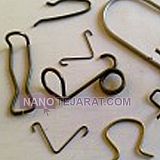
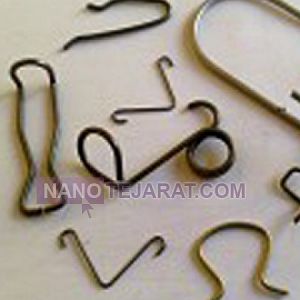
spring
Formed springs are engineered elastic components with customized three dimensional geometries manufactured from carbon steel, alloy steel, or stainless steel wire. The wire diameter typically ranges from 0.5 to 12 millimeters with tolerances of ±0.02 to ±0.08 millimeters according to DIN EN 10270. The shear modulus for spring steel is approximately 79 gigapascals, and ultimate tensile strength varies between 1200 and 2200 megapascals. The minimum bending radius is usually defined as 1.5 to 2 times the wire diameter to reduce stress concentration. Stress relief heat treatment is performed at temperatures between 250 and 450 degrees Celsius. Surface coatings include phosphate, galvanized, or epoxy layers with thicknesses from 8 to 20 microns.
The structural design of formed springs is based on bending and torsional stress analysis, with a typical safety factor between 1.5 and 2.5. The post heat treatment hardness for carbon spring steel ranges from 44 to 52 HRC. Load capacity varies depending on geometry and may range from 5 to 5000 newtons. Fatigue life within operational cycles of 10^5 to 10^7 is achieved with a stress concentration factor below 1.8. Quality control includes static load testing, dynamic fatigue testing, and dimensional inspection with 0.01 millimeter accurac
 | |
| Original-Spring | 021-66826279 |
| dizel-part |
| Iran |
| 021-55410365 |
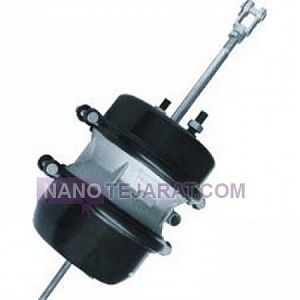
spring brake chamber
A dual-circuit brake booster integrates two independent vacuum chambers within a single steel housing. The primary and secondary diaphragm diameters typically range from 250 to 300 mm. Each circuit provides an independent force multiplication ratio between 4:1 and 6:1. The system utilizes two separate control valves rated for operational pressures up to 120 bar. The chambers are constructed from high-strength stainless steel with a 2 mm thickness. The independent output rods have a 50 mm linear travel with a tolerance of ±0.1 mm. This design ensures complete isolation of front and rear circuits in case of a leak. The assembly endures over 1 million operational cycles in durability testing.
The internal structure features two synthetic rubber diaphragms reinforced with fabric fibers. An electronic valve regulator EVP often modulates the boost ratio based on vehicle speed. Required vacuum pressure is a minimum of 0.9 bar absolute in both chambers. System response time is enhanced to under 80 milliseconds for emergency braking. An automatic fault detection system identifies a 0.2 bar pressure drop within 0.5 seconds. A central locking mechanism prevents asynchronous operation of the two circuits. Total assembly weight varies between 5.5 and 8 kilograms. This booster is certified
 | |
| dizel-part | 021-55410365 |
| helicoilshams |
| Iran |
| 021-66712078 |
Spring
A leaf spring is a mechanical energy-storing component with a multi-layer structure. These springs are typically manufactured from carbon-silicon steel per SAE 5160 or 9254 standards. The overall spring length varies from 800 to 1800 mm depending on the application. The number of leaves can range from 3 to 15, with each leafs thickness between 6 and 15 mm. The material yield strength is typically over 1200 MPa. They undergo hot forming followed by quenching and tempering processes. The final surface hardness after heat treatment is between 40 and 50 Rockwell C. The static load capacity for a typical commercial vehicle spring ranges from 2000 to 5000 kgf. This capacity depends on geometry and the number of leaves.
The leaf spring structure consists of a main leaf and several progressively shorter graduated leaves. All leaves are clamped together by a central bolt U-bolt and steel bands. The spring is mounted on a shackle pin at the center. The ends are designed as an eye or with a rubber bushing for connection. Graphite or polyethylene lubricants are used to reduce inter-leaf friction. Fatigue testing under alternating load is performed according to JIS B 2704 standard. These springs must endure over 200,000 full load cycles without cracking. Their primary application is in the
 | |
| helicoilshams | 021-66712078 |
| Original-Spring |
| Iran |
| 021-66826279 |
spring
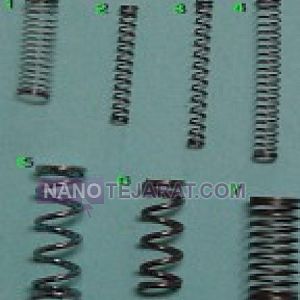
A compression spring is a helical elastic element designed to withstand axial compressive loads and store mechanical energy. Wire diameter typically ranges from 0.2 to 20 millimeters, while outer diameter varies between 2 and 200 millimeters. The spring index D over d is commonly maintained between 4 and 12 to ensure stability and uniform stress distribution. The spring rate is calculated using k equals Gd to the fourth power divided by 8nD to the third power. The shear modulus of spring steel is approximately 79 gigapascals, with allowable shear stress between 400 and 800 megapascals. Free pitch and active coil number are defined according to working stroke and a safety factor from 1.2 to 1.8.
The structure consists of concentric coils with closed or ground ends to provide uniform load transfer. Free length may range from 5 to 600 millimeters, and maximum allowable deflection is typically 30 to 40 percent of free length. Stress relief heat treatment is performed between 250 and 450 degrees Celsius to improve dimensional stability. Final hardness for carbon steel is adjusted between 42 and 52 HRC. Fatigue life within 10^5 to 10^7 operating cycles is achieved with a stress concentration factor below 1.6. Quality control includes load testing, permanent set evaluation, and dimen
 | |
| Original-Spring | 021-66826279 |
| helicoilshams |
| Iran |
| 021-66712078 |
spring
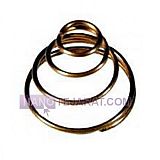
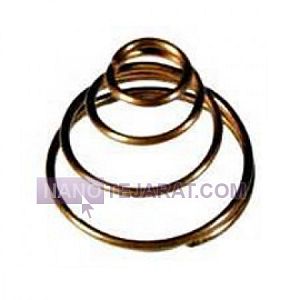
A helical compression spring is an elastic mechanical element for storing and releasing energy. These springs are typically made from high-carbon steel wire per ASTM A227 or A229 standards. The wire diameter d ranges from 0.5 to 20 mm, and the mean coil diameter D varies from 3 to 200 mm. The spring index C = D/d is usually chosen between 4 and 12 for optimal strength-flexibility balance. The shear modulus of steel G is approximately 79 GPa. The spring rate or constant k is calculated between 0.1 and 100 N/mm. The allowable design shear stress is typically up to 450 MPa for hardened steel. These springs undergo a stress-relief heat treatment at around 250 degrees Celsius.
The spring structure is defined by precise geometric parameters: number of active coils n, pitch p, and helix angle α. The spring ends are usually ground flat for uniform load distribution. The manufacturing process involves coiling, heat treatment, and often shot peening. This process increases fatigue life by up to 50%. The solid length must be less than 80% of the free length. Special-purpose springs may be made from non-ferrous materials like beryllium copper or Inconel. Quality control tests include verifying load at solid height and fatigue testing under alternating cycles. They are often packaged with
 | |
| helicoilshams | 021-66712078 |
| sayalsanat |
| Iran |
| 021-22087856 |
Vogiran spring-loaded check valve PN16
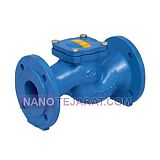
The Vogiran spring-loaded check valve PN16 is manufactured with a ductile iron body GGG40 and designed for a nominal pressure of 16 bar. It features a vertical design with a spring-loaded disc mechanism that lifts during forward flow and closes instantly when flow stops. Internal components, including the spring, disc, and seat, are made of stainless steel for superior corrosion resistance and operation within a temperature range of 0°C to 200°C. The internal sealing uses metal-to-rubber contact EPDM or NBR to ensure complete backflow prevention. Its compact structure and low weight allow easy installation in both horizontal and vertical pipelines. Built according to DIN 3202 and EN 12288 standards, it is suitable for water, air, steam, and light oil applications.
Depending on nominal size DN50–DN200, the Vogiran valve weighs between 6 and 45 kilograms. The connection flanges are designed per EN1092-2 standard, and the internal surfaces are epoxy-coated for corrosion protection. The fast-acting spring mechanism eliminates water hammer and ensures reliable performance in pressure-variable systems. With its long service life, easy maintenance, and tight sealing, the Vogiran PN16 spring check valve is a dependable and efficient choice for water supply, thermal systems, and in
 | |
| sayalsanat | 021-22087856 |
| Original-Spring |
| Iran |
| 021-66826279 |
spring
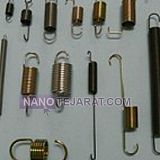
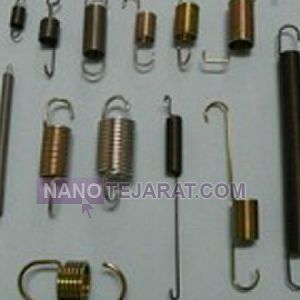
An extension spring is a helical elastic element designed to withstand axial tensile loads and generate restoring force. Wire diameter typically ranges from 0.2 to 12 millimeters, while outer diameter varies between 3 and 120 millimeters. The shear modulus of spring steel is approximately 79 gigapascals, and allowable tensile stress is defined between 500 and 1100 megapascals. Initial tension is created through pre twisting of the wire and may equal 5 to 30 percent of rated load. The spring rate is calculated using k equals Gd to the fourth power divided by 8nD to the third power. The spring index is commonly maintained between 6 and 12 to reduce stress concentration.
The structure consists of tightly wound coils without free pitch and two end hooks or loops for attachment. Free length may range from 10 to 500 millimeters, and maximum allowable extension is typically 20 to 40 percent of free length. Stress relief heat treatment is performed between 200 and 400 degrees Celsius to enhance dimensional stability. Final hardness for carbon steel is adjusted between 42 and 50 HRC. Fatigue life within 10^5 to 10^7 cycles is achieved with a safety factor between 1.3 and 1.8. Quality control includes initial tension testing, fatigue evaluation, and dimensional inspection with 0.01 mill
 | |
| Original-Spring | 021-66826279 |
| sayalsanat |
| Iran |
| 021-22087856 |
Vogiran straight spring check valve PN16
The Vogiran straight spring check valve PN16 features a ductile iron GGG40 or carbon steel body, designed for a nominal pressure of 16 bar. It employs a spring-loaded disc mechanism that opens with forward flow and closes rapidly to prevent backflow. Internal components, including the disc, spring, and seat, are stainless steel for high corrosion and wear resistance, with an operating temperature range of 0°C to 200°C. The internal sealing uses EPDM or NBR elastomers to minimize leakage. Its straight flow path reduces pressure drop and ensures silent operation in horizontal and vertical pipelines. Manufactured in accordance with DIN 3202 and EN 12266 standards, it is suitable for water, steam, air, and industrial oils.
Depending on nominal size DN15–DN200, the valve weight ranges from 3 to 40 kilograms, with flanges designed per EN1092-2 standards. The internal surfaces are epoxy-coated for superior corrosion and humidity resistance, extending service life. Its robust construction and engineered design enable quick installation and easy maintenance. The Vogiran PN16 straight spring check valve delivers reliable operation, tight sealing, and long-lasting performance, making it a professional choice for industrial pipelines and thermal installations.

 | |
| sayalsanat | 021-22087856 |
| omid-fanar |
| Iran |
| 021-88211563-4 |
Forming Springs
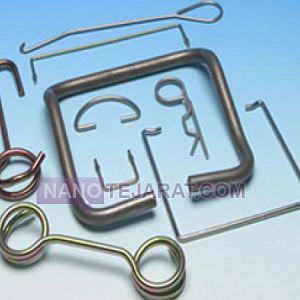
A wire forming spring is a three dimensional elastic component manufactured by precision bending of carbon steel, alloy steel, or stainless steel wire. Wire diameter typically ranges from 0.5 to 14 millimeters with tolerances between ±0.02 and ±0.08 millimeters. Ultimate tensile strength varies from 900 to 2000 megapascals depending on alloy grade. Minimum bending radius is generally selected between 1.5 and 3 times the wire diameter to reduce stress concentration. The modulus of elasticity of steel is about 200 gigapascals and shear modulus is 79 gigapascals. Stress relief heat treatment is performed between 250 and 450 degrees Celsius.
The structural design is based on bending and torsional stress analysis with safety factors between 1.5 and 2.5. Dimensional accuracy can reach ±0.1 millimeter with angular tolerance below ±1 degree. Load capacity varies between 10 and 3000 newtons depending on geometry. Surface finishing includes galvanizing, phosphating, or powder coating with thickness from 8 to 25 microns. Fatigue life within 10^5 to 10^7 cycles is achieved by maintaining stress concentration factor below 1.8. Quality control includes static load testing, fatigue evaluation, and three dimensional inspection using CMM systems.
 | |
| omid-fanar | 021-88211563-4 |
| omid-fanar |
| Iran |
| 021-88211563-4 |
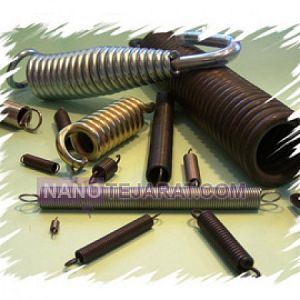
tension Springs
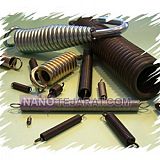
An extension spring is a helical elastic element with tightly wound coils designed to withstand axial tensile loads and provide restoring force. Wire diameter typically ranges from 0.2 to 16 millimeters, and outer diameter varies between 4 and 150 millimeters. Initial tension is generated through internal twisting of the wire and defined as 5 to 35 percent of rated load. The shear modulus of spring steel is approximately 79 gigapascals, and allowable tensile stress ranges from 500 to 1000 megapascals. The spring index is generally selected between 6 and 14 to reduce stress concentration. The spring rate is calculated using k equals Gd to the fourth power divided by 8nD to the third power.
The structure consists of a close wound helical body with German, English, or full loop end hooks. Free length may range from 15 to 600 millimeters with 5 to 25 active coils. Stress relief heat treatment is performed between 200 and 420 degrees Celsius. Final hardness of carbon steel after treatment ranges from 40 to 50 HRC. Maximum allowable extension is typically limited to 20 to 45 percent of free length. Quality control includes initial tension testing, fatigue evaluation up to 10^6 cycles, and dimensional inspection with 0.01 millimeter precision.
 | |
| omid-fanar | 021-88211563-4 |
| omid-fanar |
| Iran |
| 021-88211563-4 |
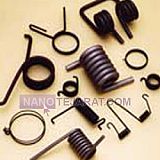
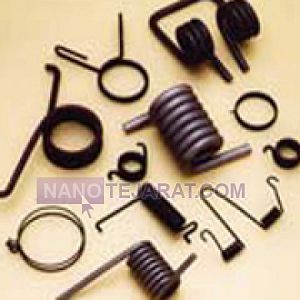
Coil springs
A torsion spring is a helical elastic component designed to generate torque and store angular energy in rotational mechanisms. Wire diameter typically ranges from 0.3 to 18 millimeters, and mean coil diameter varies between 5 and 180 millimeters. The shear modulus of spring steel is approximately 79 gigapascals, and allowable bending stress ranges from 600 to 1200 megapascals. Effective working angle is defined between 30 and 270 degrees depending on design. The torque rate is calculated using k equals Ed to the fourth power divided by 10.8nD. The spring index is commonly selected between 4 and 12 to control stress concentration.
The structure consists of a helical body with two straight or angular legs measuring 5 to 250 millimeters in length. The number of active coils typically ranges from 2 to 15 to achieve required angular stiffness. Stress relief heat treatment is performed between 250 and 420 degrees Celsius. Final hardness of carbon steel after treatment ranges from 44 to 52 HRC. Maximum allowable stress at the leg junction is limited to less than 80 percent of yield strength. Quality control includes torque angle testing, fatigue evaluation up to 10^6 cycles, and angular deviation measurement within ±1 degree.
 | |
| omid-fanar | 021-88211563-4 |
| Original-Spring |
| Iran |
| 021-66826279 |
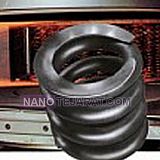
spring production
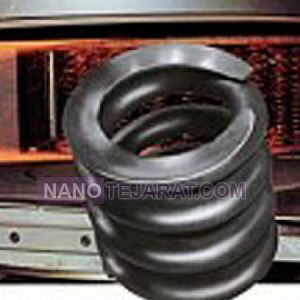
Spring manufacturing is the process of designing and producing mechanical elements for storing and releasing energy under compressive, tensile, or torsional loads. Wire diameters typically range from 0.2 to 25 mm, and free lengths are designed from 5 to 1000 mm. Raw materials include chrome spring steel, stainless steel, and fatigue resistant alloys. Spring stiffness is determined based on elastic modulus and geometry, ranging from 0.5 to 5000 N/mm. Surface coatings such as nickel, zinc, or phosphate improve corrosion and wear resistance. Springs are designed according to DIN and ISO standards for stable performance.
Structurally, the manufacturing process includes precise wire drawing, CNC forming, coiling or bending, and stress relief heat treatment at 200 to 450°C. Quality control is performed through load, deflection, and torque testing with ±1 percent accuracy. Surface finishing and industrial coating increase component life. Production equipment includes automatic coiling machines, heat treatment furnaces, and digital measurement systems. Manufactured springs are used in automotive, industrial machinery, medical equipment, and precision tools, designed for more than one million operating cycles.
 | |
| Original-Spring | 021-66826279 |
| omid-fanar |
| Iran |
| 021-88211563-4 |
spring
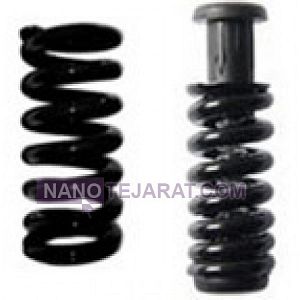
A compression spring is a helical elastic element designed to withstand axial compressive loads and store mechanical energy in industrial systems. Wire diameter typically ranges from 0.3 to 25 millimeters, and outer diameter varies between 3 and 250 millimeters. The spring index, defined as mean diameter over wire diameter, is commonly selected between 4 and 12. The shear modulus of spring steel is approximately 79 gigapascals, and allowable shear stress ranges from 450 to 900 megapascals. The spring rate is calculated using k equals Gd to the fourth power divided by 8nD to the third power. Maximum allowable deflection is generally limited to 25 to 40 percent of free length.
The structure consists of concentric coils with closed or ground ends to ensure uniform load distribution. Free length may vary from 10 to 800 millimeters with 3 to 20 active coils. Stress relief heat treatment is performed between 250 and 450 degrees Celsius. Final hardness of carbon steel after treatment ranges from 42 to 52 HRC. Fatigue life within 10^5 to 10^7 cycles is achieved with a safety factor between 1.2 and 1.8. Quality control includes static load testing and dimensional inspection with 0.01 millimeter accuracy.
 | |
| omid-fanar | 021-88211563-4 |
| Original-Spring |
| Iran |
| 021-66826279 |
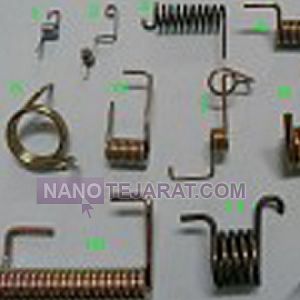
spring
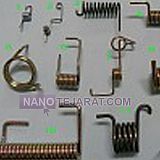
A torsion spring is a helical elastic component designed to withstand torque and generate angular restoring force. Wire diameter typically ranges from 0.3 to 15 millimeters, and inner diameter varies between 3 and 150 millimeters. The shear modulus of spring steel is approximately 79 gigapascals, and allowable bending stress is defined between 600 and 1200 megapascals. The permissible working angle is commonly up to 90 or 180 degrees depending on geometric design. Torque is calculated as k multiplied by angular deflection in radians. The spring index is generally selected between 4 and 10 to reduce stress concentration.
The structure consists of a helical body and two legs with lengths from 5 to 200 millimeters for torque transmission. The number of active coils is typically designed between 2 and 12 to achieve precise angular stiffness. Stress relief heat treatment is performed within 250 to 400 degrees Celsius. Final hardness of carbon steel after treatment is adjusted between 44 and 52 HRC. Fatigue life within 10^5 to 10^7 cycles is ensured with a safety factor from 1.5 to 2. Quality control includes torque angle testing and leg angle tolerance measurement with ±1 degree accuracy.
 | |
| Original-Spring | 021-66826279 |