
| Exporter, Wholesale, Manufacturer | |
| Tehran-West |  |
| +989122003350 | |

- Price :negotiated
L90 , Megane Solenoid , Iran
- Price :To negotiate
- order by whatsapp
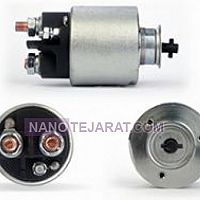
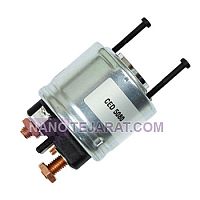
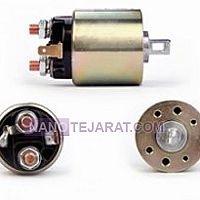
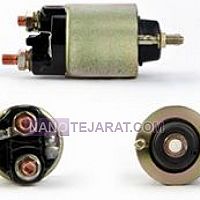
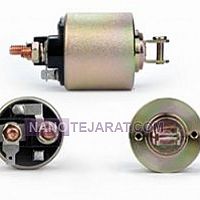
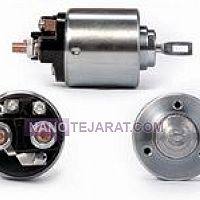
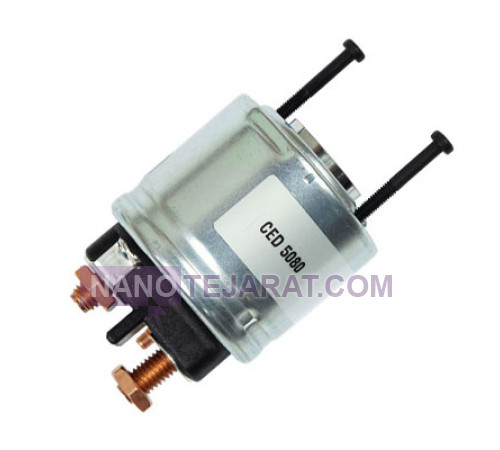
The starter solenoid for Renault Mégane and L90 is a dual-coil electromagnetic switch. It operates at the standard 12V DC vehicle electrical voltage. The pull-in coil draws an initial inrush current of up to 35 Amps. Its subsequent hold-in current stabilizes at only 3 Amps. The generated magnetic pull force is a minimum of 45 Newtons. This force ensures full linear plunger travel of 12 millimeters. The total actuation time for pinion engagement is under 120 milliseconds. This solenoid mounts directly onto the starter motors main housing.
The units design incorporates two main electrical terminals. Terminal 50 receives the control signal from the vehicles ignition switch. Terminal 30 provides the direct high-current connection to the battery positive. The pull-in coils resistance at 20°C is 0.25 Ohms. The hold-in coil resistance at the same temperature is 1.8 Ohms. Its body is constructed from galvanized steel with anti-corrosion epoxy coating. It maintains reliable performance from -30 to +105 degrees Celsius. Its service life exceeds 100,000 cycles, complying with ISO 16750 standards.
You can order and buy L90 , Megane Solenoid from Iran by contacting us through whatsaap and email.
WEBSITE: L90 , Megane Solenoid Iran
Installation and Calibration Guide for Megan Automatic Start Base Version
Step 1: Hardware Installation
Disconnect the vehicle battery completely. Install the automatic start unit in the engine compartment. Connect the RPM sensor to the ignition coil. Attach the voltage sensor to the batterys positive terminal. Connect the devices relay output to the main starter wire.
Step 2: Initial Settings
Review all connections and reconnect the battery. Power on the device and enter the settings menu. Set the start delay time based on battery capacity. Adjust the automatic start voltage threshold to 12.2 volts. Define the engine operating temperature for system activation.
Step 3: Calibration and Testing
Place the system in test mode. Simulate an automatic start by manually cutting power. Record the start time and engine performance. Optimize the RPM sensor sensitivity settings. Verify a full battery charge cycle after installation.
Safety Notes:
This guide is for generic systems. Always follow the device manufacturers manual. Installation by a qualified technician is recommended. Incorrect settings may damage the starter or battery.