
| Exporter, Wholesale, Manufacturer | |
| Tehran-South |  |
| +989122003350 | |

- Price :negotiated
elevator rail , Iran
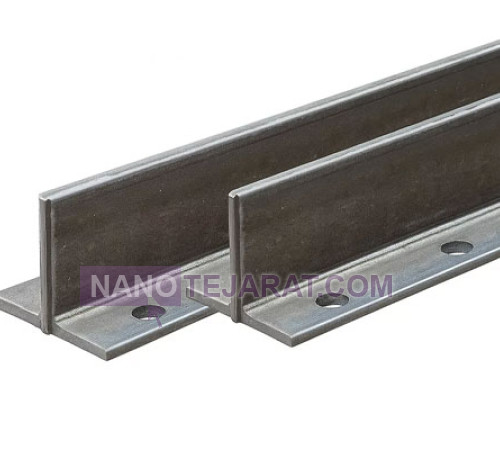
Elevator guide rails are manufactured from fine-grained non-alloy carbon steel per DIN EN 10025-2. The common grade is S355JR with a minimum yield strength of 355 MPa. Rail surfaces undergo a hardening process to achieve a hardness of 149 to 197 Brinell. The dimensional tolerance of the T-type profile, according to EN 81-20, is maintained within ±0.25 mm. The standard length per rail section is 5 meters, with production possible up to 8 meters. Rails are joined using steel fishplates and hot-dip galvanized grade 8.8 bolts. The total vertical alignment accuracy in the hoistway must not exceed 10 mm per 30 meters.
The rail profile is designed as a broad-based T-shape. This shape provides maximum bending resistance and stability against lateral forces. The contact surface for the guide shoes is finished to a surface roughness Ra below 3.2 µm. This reduces the coefficient of friction and enables silent travel. Rails are protected against corrosion by zinc flake coating or hot-dip galvanization. The protective coating thickness varies between 45 and 85 microns. The rails temperature tolerance is defined for -20 to +120 °C without deformation. Their fire resistance complies with class A1 DIN 4102.You can order and buy elevator rail from Iran by contacting us through whatsaap and email.
WEBSITE: elevator rail Iran
International Standards for Elevator Guide Rails
The main standards for elevator guide rails include ISO 7465 and EN 81-20/50. The ISO 7465 standard defines the dimensions, geometric tolerances, and mechanical properties of steel guide rails. The EN 81-20/50 standard covers the safety and installation of guide rails, including connection methods, clearance from walls, and resistance to dynamic loads. The rail material must be mild steel with a minimum tensile strength of 370 MPa and appropriate surface hardness to reduce wear. Twist and longitudinal straightness tolerances of the rail must be controlled according to standard tables. The rail connection method using grade 8.8 galvanized bolts and nuts and fishplates is mandatory. The clearance between the rail and the shaft wall and the distance between two rails must be precisely adhered to according to load calculations. Adherence to these standards ensures smooth movement, noise reduction, and safety against cabin deviation.
Hydraulic jack
Lift engine
Elevator cabin
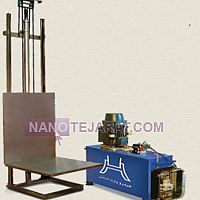
Hydraulic lift
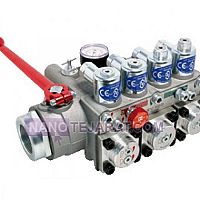
blain
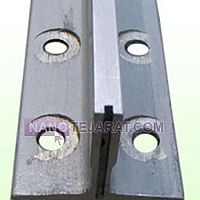
elevator rail
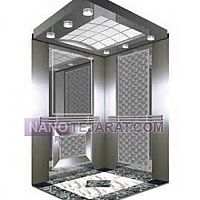
Elevator
Screw Pump
Elevator
Lift engine