
| Exporter, Wholesale, Manufacturer | |
| Tehran_North |  |
| +989122003350 | |

- Price :negotiated
elevator control panel , Iran
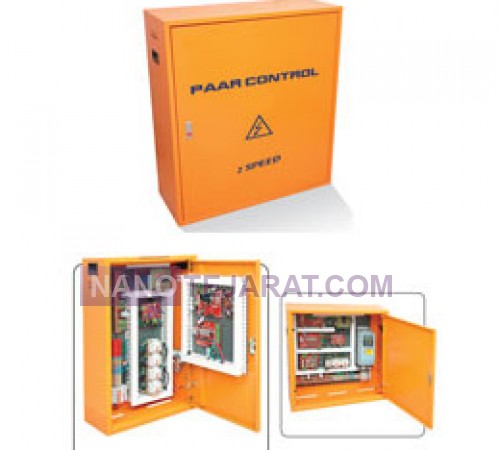
An elevator electrical panel is a power distribution and control assembly that manages incoming energy for motors, drives, and safety devices. Rated input voltage is typically 380 to 400 volts AC three phase with nominal current from 25 to 160 amperes. Copper busbars with cross sections of 10 to 50 square millimeters are selected to withstand short circuit currents up to 10 kiloamperes. The main switch is generally an MCCB with breaking capacity between 25 and 50 kiloamperes. Metal enclosure protection ranges from IP31 to IP54 with epoxy powder coating thickness of 60 to 90 microns. Insulation resistance exceeds 100 megaohms at 1000 volts DC testing.
The structure includes DIN mounting rails, power contactors, protective relays, and standard terminals with class B thermal rating. Internal wiring uses stranded copper cables with cross sections from 1.5 to 35 square millimeters. Permissible temperature rise at connection points is limited to 45 degrees Celsius above ambient. Grounding system resistance below 2 ohms is required for electrical safety. Quality tests include earth continuity verification, dielectric strength testing, and functional assessment of protective switches. Design service life under standard operating conditions exceeds 15 years.You can order and buy elevator control panel from Iran by contacting us through whatsaap and email.
WEBSITE: elevator control panel Iran
Troubleshooting and Common Elevator Control Panel Errors in iran
Troubleshooting an elevator control panel involves analyzing error codes, measuring voltage, and verifying input and output signals. Three phase voltage must remain between 380 and 400 volts with less than 2 percent imbalance. Overcurrent faults are often caused by motor short circuits or variable frequency drive failures and require comparison with rated current values. Floor leveling errors are typically linked to faulty encoders or landing switches. A drop in the 24 V DC supply can lead to repeated controller resets. Fuses, contactors, and safety relays should be tested using resistance measurements. Motor insulation resistance must exceed 1 megaohm under a 500 volt test. Recording error logs and performing inspection mode runs ensures accurate and traceable diagnostics.