




| Exporter, Wholesale, Manufacturer | |
| Tehran |  |
| +989122003350 | |

- Price :negotiated
hotel restaurant - TeaPot , Iran
- Price :To negotiate
- order by whatsapp
The restaurant porcelain teapot is manufactured from dense porcelain with water absorption below 0.5 percent and density between 2.3 and 2.6 grams per cubic centimeter. Firing temperature ranges from 1280 to 1400 degrees Celsius, providing flexural strength above 95 megapascals. Nominal capacity is designed between 0.6 and 1.5 liters, and net weight varies from 700 to 1400 grams. Wall thickness is selected between 4 and 6 millimeters to enhance thermal shock and impact resistance. A hygienic glaze with surface hardness above 6 on the Mohs scale and high chemical resistance is applied. Overall dimensional tolerance is controlled within ±1.5 millimeters.
The structure features a spherical or oval body with an integrated handle and reinforced spout. Handle curvature radius ranges from 20 to 35 millimeters to optimize ergonomics and stress distribution. The pouring spout angle is set between 15 and 25 degrees to ensure controlled and drip free flow. The lid is precisely fitted with clearance below 0.5 millimeter. Thermal resistance is guaranteed from minus 20 to plus 250 degrees Celsius. Quality testing includes thermal shock evaluation, handle load resistance up to 40 newtons, and compatibility assessment with industrial dishwashers.You can order and buy hotel restaurant - TeaPot from Iran by contacting us through whatsaap and email.
WEBSITE: hotel restaurant - TeaPot Iran
Production Standards for Restaurant Porcelain Tableware in iran
Restaurant porcelain tableware standards are based on an engineered composition of kaolin, feldspar, and silica with purity above 95 percent. Final body density must exceed 2.3 grams per cubic centimeter to ensure adequate compressive strength. Water absorption must measure below 0.5 percent according to quality criteria. Initial firing occurs at 900 to 1000 degrees Celsius, followed by final firing at 1250 to 1400 degrees Celsius. Thermal shock resistance must withstand a temperature difference of at least 120 degrees Celsius. Glaze hardness should be at least 6 on the Mohs scale, and abrasion resistance is evaluated over 2000 industrial washing cycles. Dimensional tolerance must not exceed 2 percent, and chip resistance testing is performed at a minimum of 0.5 joules.

restaurant porcelain-sugar pot
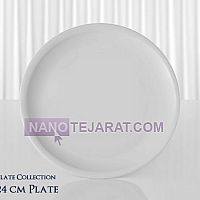
restaurant porcelain- flat plate
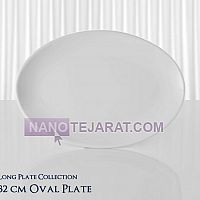
restaurant porcelain- oval plate
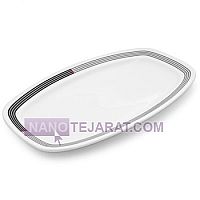
restaurant porcelain - kebab platter 39

restaurant porcelain- vase

restaurant porcelain- Russian Mug

restaurant porcelain-salt

restaurant porcelain- German Mug

restaurant porcelain- big jug
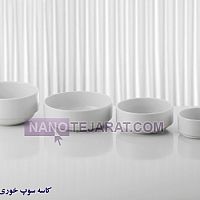
restaurant porcelain- bowl