pump Iran
Cellphone / Whatsapp: +989122003350
| yadak disel |
| Iran |
| (+98)9122003350 |
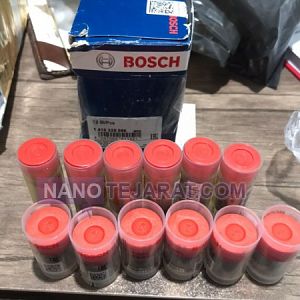
bus 911 pump plunger
The diesel pump plunger of the 911 bus, typically installed on Mercedes-Benz OM457 or OM447 engines, is an ultra-precision component in the inline fuel injection system. The plunger diameter in these engines ranges from 9 to 11 millimeters depending on the part number with a tolerance below 1.5 microns. The plunger material is hardened steel reaching 60 to 64 HRC for superior wear resistance against microscopic fuel contaminants. The delivery valve mounted above each pump cylinder is responsible for opening and closing the high pressure fuel path to the injector. The opening pressure of the delivery valve is typically set between 2 to 5 bars to prevent fuel dribbling after injection completes. The coordinated operation of the plunger and delivery valve creates precise injection timing with a uniform pressure profile across all engine speeds. Proper maintenance of these components directly affects fuel consumption and engine smoothness during operation.
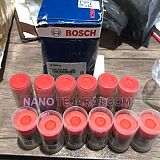
The injector nozzle of the 911 bus is the final fuel circuit component that sprays high pressure fuel as fine droplets into the combustion chamber. The injection pressure for this nozzle ranges from 220 to 280 bars depending on the nozzle type (P-type or S-type). The nozzle tip typically has 4 to 6 holes with diameters of 0.2 to
 | |
| yadak-disel | 09358809164 |
| cummins market |
| Iran |
| (+98)9122003350 |
cummins engine oil pump
The Cummins engine oil pump is manufactured as an internal gear type (Gerotor) with an inner and outer rotor. The rotor material is powder metallurgy steel with a density of 7.4 grams per cubic centimeter. The number of teeth on the inner rotor in the 6BT model equals 7 and on the outer rotor equals 8 teeth. The outer diameter of the complete rotor assembly in this model is 65 millimeters and the thickness is 20 millimeters. The radial clearance at the tooth tips (tip clearance) in the original sample is set between 0.08 and 0.12 millimeters. The axial clearance between the rotor and pump housing (end play) is 0.04 to 0.08 millimeters. The oil displacement volume per pump revolution in the 6BT model equals 22 cubic centimeters. The KTA19 model features a larger rotor with a diameter of 95 millimeters and a thickness of 32 millimeters. The displacement volume in the KTA19 reaches 65 cubic centimeters per revolution. The pump housing is cast from grey cast iron GCI-250 with a pressure tolerance of 14 bar.
The Cummins oil pump supplies oil pressure of 2.5 to 5.5 bar at rated engine speed. The volumetric flow rate in the 6BT model at 2500 RPM equals 65 liters per minute. The QSL9 model has a flow rate of 110 liters per minute and the KTA19 model has a flow rate of 180 liters per m
-24-u3142-cummins-oil-pump.jpg?width=160&height=160&cropratio=160:160&image=/admin/uploads/اویل-پمپ-موتور-کمنز-CUMMINS-cummins-engine-oil-pump-لوازم-یدکی-موتور-کمنز-(کامینز)-24-u3142-cummins-oil-pump.jpg&url=/admin/uploads/اویل-پمپ-موتور-کمنز-CUMMINS-cummins-engine-oil-pump-لوازم-یدکی-موتور-کمنز-(کامینز)-24-u3142-cummins-oil-pump.jpg "cummins engine oil pump")
-24-u3142-cummins-oil-pump.jpg?width=300&height=300&cropratio=300:300&image=/admin/uploads/اویل-پمپ-موتور-کمنز-CUMMINS-cummins-engine-oil-pump-لوازم-یدکی-موتور-کمنز-(کامینز)-24-u3142-cummins-oil-pump.jpg&url=/admin/uploads/اویل-پمپ-موتور-کمنز-CUMMINS-cummins-engine-oil-pump-لوازم-یدکی-موتور-کمنز-(کامینز)-24-u3142-cummins-oil-pump.jpg "cummins engine oil pump") | |
| cummins-market | 021-55406939 |
| cummins market |
| Iran |
| (+98)9122003350 |
cummins engine water pump
The Cummins engine water pump is of the centrifugal type with a closed impeller and a volute housing. The pump housing material is grey cast iron GCI-250 with an electrostatic anti-corrosion coating. The impeller diameter in the 6BT model equals 95 millimeters with 6 forward-curved blades. The KTA19 model features a 140 millimeter impeller with 8 blades and a thickness of 12 millimeters. The water pump bearing is a double-ball type with a diameter of 35 millimeters and a double lip seal. The axial clearance between the impeller and the pump housing in the original sample is set between 0.5 and 0.8 millimeters. The water displacement volume in the 6BT model is approximately 180 liters per minute at 2500 RPM. The QSK50 model has a flow rate of 650 liters per minute and an impeller diameter of 220 millimeters. The pump pulley is manufactured from ductile cast iron with 6 V-shaped grooves and an outer diameter of 130 millimeters.
The Cummins water pump supplies an output pressure of 0.8 to 1.5 bar at rated engine speed. The flow rate in the 6BT model equals 2200 liters per hour and in the KTA19 model equals 5500 liters per hour. The mechanical seal of the water pump is manufactured from silicon carbide with a hardness of 1500 Vickers. This seal is capable of withstanding temperatu
-24-u3142-cummins-water-pump.jpg?width=160&height=160&cropratio=160:160&image=/admin/uploads/واتر-پمپ-موتور-کمنز-CUMMINS-cummins-engine-water-pump-لوازم-یدکی-موتور-کمنز-(کامینز)-24-u3142-cummins-water-pump.jpg&url=/admin/uploads/واتر-پمپ-موتور-کمنز-CUMMINS-cummins-engine-water-pump-لوازم-یدکی-موتور-کمنز-(کامینز)-24-u3142-cummins-water-pump.jpg "cummins engine water pump")
-24-u3142-cummins-water-pump.jpg?width=300&height=300&cropratio=300:300&image=/admin/uploads/واتر-پمپ-موتور-کمنز-CUMMINS-cummins-engine-water-pump-لوازم-یدکی-موتور-کمنز-(کامینز)-24-u3142-cummins-water-pump.jpg&url=/admin/uploads/واتر-پمپ-موتور-کمنز-CUMMINS-cummins-engine-water-pump-لوازم-یدکی-موتور-کمنز-(کامینز)-24-u3142-cummins-water-pump.jpg "cummins engine water pump") | |
| cummins-market | 021-55406939 |
| yadak disel |
| Iran |
| (+98)9122003350 |
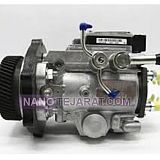
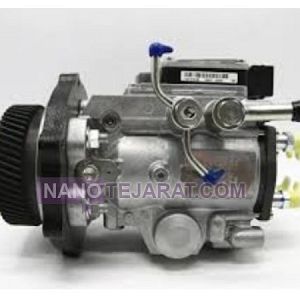
Full pump
The Isuzu 6-ton diesel fuel pump is an inline pump type commonly branded as Bosch P or Zexel. The number of plungers in this pump equals the number of engine cylinders which is four. The plunger diameter in this pump varies between 8 to 10 millimeters depending on the engine model. The maximum generated pressure by this pump reaches 700 to 1200 bars. The nominal pump speed at full engine RPM between 3000 to 3500 is precisely calibrated. The pump housing is manufactured from ductile cast iron with thermal stress relief treatment. The internal rotor and vanes of the feed pump are made of hardened steel reaching 55 HRC. The lubrication system of this pump operates automatically using engine oil or diesel fuel. The clearance between plunger and barrel cylinder is less than 2 microns for minimal internal leakage. The pump weighs approximately 15 to 20 kilograms depending on the exact model configuration.
This pump is installed on 4JB1, 4JH1, and 4HG1 diesel engines found in Isuzu 6-ton trucks. The injection timing for the 4JB1 engine is set between 8 to 10 degrees before top dead center. The fuel delivery amount per cycle is adjusted using calibration screws located on the pump head. The tightening torque for pump mounting bolts to the engine block is between 25 to 35 Newton-meters
 | |
| yadak-disel | 09358809164 |
| volvo loader |
| Iran |
| (+98)9122003350 |
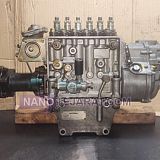
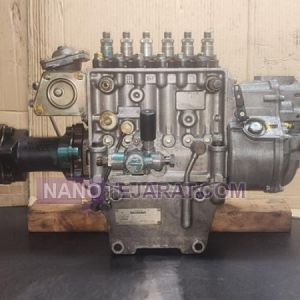
Volvo loader L90 and L120 injection pump
The fuel injection pump for Volvo L90 and L120 loaders is a precision mechanical unit designed to deliver high‑pressure diesel consistently to six cylinders at exact timing. Typical delivery pressures range from 1600 to 2200 bar depending on engine load and RPM. The pump rotor and plunger assembly are CNC machined with tolerances below ±0.005 mm to maintain volumetric accuracy across all injection events. Flow metering is controlled by a calibrated governor that adjusts quantity within ±3% of target volume under varying engine speeds. Bearings and seals are made from hardened steel and fluorocarbon elastomers respectively, ensuring resistance to wear and thermal cycling up to 300 degrees Celsius. Each pump undergoes bench testing for injection timing, leakage, and pressure stability before installation, minimizing variations that reduce combustion efficiency or increase soot formation.
In operational environments, a well‑maintained injector pump on L90 and L120 loaders contributes directly to torque and fuel efficiency. Fuel delivery timing variance is typically kept within ±0.2 degrees crank angle to prevent pre‑ignition or detonation. Pump drive gears are helical cut to reduce noise and extend service life beyond 8000 engine hours with correct filtration. Precision
 | |
| volvo-loader | 02155433645 |
| hydraulicmarket |
| Iran |
| (+98)9122003350 |
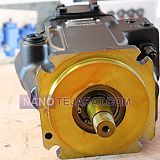
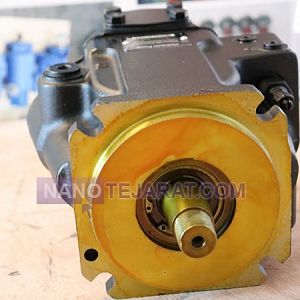
Linde HRR130 hydraulic pump D8N bulldozer
The HRR130 Linde hydraulic main pump installed in the Caterpillar D8N bulldozer is a high-pressure axial piston pump designed for industrial earthmoving applications. Its displacement is 130 cc per revolution, and it can generate pressures up to 350 bar. The pump’s housing is made from hardened steel, while pistons, swash plate, and valve components are precision-machined to minimize internal leakage below 2%. Recommended operating temperature is between -20°C and 95°C, and ISO VG46 hydraulic oil ensures optimal lubrication and performance. The pump features a black protective coating to prevent corrosion in harsh working conditions.
Common causes of HRR130 pump failure include contaminated hydraulic fluid, cavitation due to low suction pressure, piston and cylinder block wear, and valve sticking. High operating temperatures accelerate seal degradation, while improper installation can lead to misalignment and premature bearing failure. Internal leakage reduces flow efficiency, causing the bulldozer’s blade or attachments to operate slower than specified. Vibration and noise often indicate shaft or swash plate wear that requires immediate inspection.
Repairing the HRR130 pump involves complete disassembly, inspection, and measurement of all components. Damaged pistons,
 | |
| hydraulicmarket | 021-55429639 |
| parsianrahbalandeh |
| Iran |
| (+98)9122003350 |
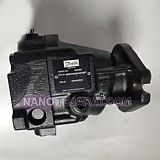
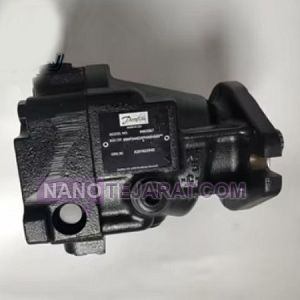
SAUER DANFOSS roller M44 hydraulic pump
The test and repair process of the M44 and M46 main pumps from Sauer-Danfoss is conducted with precise engineering and numerical evaluation. Initially, the pump is removed from the hydraulic system, and a **preliminary inspection for leakage and pressure** is performed. System pressures are measured numerically using a digital pressure gauge for example, the standard inlet pressure is 6–8 bar, while the operating outlet pressure is checked up to 350 bar for the M44 and 400 bar for the M46. Pump flow at 1,500 RPM is measured between 150–165 liters per minute. The **input shaft torque** is evaluated with a torque meter up to 450–500 Nm to ensure proper power transmission.
In the second stage, internal components including the cylinder block, pistons, and swash plate are inspected with precision tools such as digital micrometers and wear gauges. The **maximum allowable deviation for piston diameter and cylinder bore is 0.02 mm**, and any component beyond this tolerance is replaced. O-rings and seals are replaced according to operating pressures of 350–400 bar and flow rates of 150–165 L/min. The drive shaft is tested for torque resistance and wear to ensure stable operation and prevent abnormal vibrations.
The final stage involves pump assembly and **numerical perfor
 | |
| parsianrahbalandeh | 02155429639 |
| cummins market |
| Iran |
| (+98)9122003350 |
cummins engine fuel injection pump
The Cummins engine fuel injection pump is available in two types: inline pump and distributor pump. The P and MW series inline pumps are used for heavy engines such as NTA855 and KTA19. The maximum injection pressure in Cummins inline pumps varies between 800 and 1200 bar. The VE series distributor pump is designed for smaller engines like 4BT and 6BT. The injection pressure in these models reaches 650 to 850 bar. The number of plungers in a 6-cylinder inline pump equals 6 with a diameter of 10 to 12 millimeters. The plunger diameter in the 6BT model equals 10 millimeters with a stroke of 12 millimeters. The NTA855 model has a 12 millimeter plunger with a stroke of 15 millimeters. The precision machining tolerance between plunger and barrel reaches 0.002 millimeters. The plunger surface roughness after polishing reaches below 0.05 micrometers Ra.
Injection timing on the Cummins pump is adjusted using a timing screw and centrifugal spring. The advance angle on 6BT engines is approximately 12 degrees before top dead center. This angle reaches 14 degrees on the NTA855 and 16 degrees on the KTA19. The fuel rack performs linear movement of plungers to adjust engine speed. The mechanical or electronic governor maintains constant speed on diesel generators. The fuel delivery rate per
-24-u3142-cummins-fuel-pump.jpg?width=160&height=160&cropratio=160:160&image=/admin/uploads/پمپ-انژکتور-موتور-کمنز-CUMMINS-cummins-engine-fuel-injection-pump-لوازم-یدکی-موتور-کمنز-(کامینز)-24-u3142-cummins-fuel-pump.jpg&url=/admin/uploads/پمپ-انژکتور-موتور-کمنز-CUMMINS-cummins-engine-fuel-injection-pump-لوازم-یدکی-موتور-کمنز-(کامینز)-24-u3142-cummins-fuel-pump.jpg "cummins engine fuel injection pump")
-24-u3142-cummins-fuel-pump.jpg?width=300&height=300&cropratio=300:300&image=/admin/uploads/پمپ-انژکتور-موتور-کمنز-CUMMINS-cummins-engine-fuel-injection-pump-لوازم-یدکی-موتور-کمنز-(کامینز)-24-u3142-cummins-fuel-pump.jpg&url=/admin/uploads/پمپ-انژکتور-موتور-کمنز-CUMMINS-cummins-engine-fuel-injection-pump-لوازم-یدکی-موتور-کمنز-(کامینز)-24-u3142-cummins-fuel-pump.jpg "cummins engine fuel injection pump") | |
| cummins-market | 021-55406939 |
| deutz market |
| Iran |
| (+98)9122003350 |
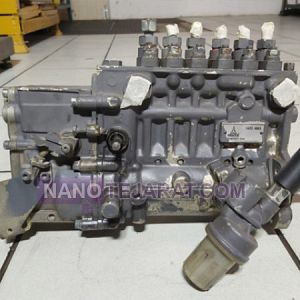
deutz engine 912 1011 1012 and 1013 injection pump
Fuel injection pumps for DEUTZ 912, 1011, 1012, and 1013 engines are precision-engineered to deliver exact fuel volumes at high pressures up to 1800 bar. These pumps feature calibrated plunger and barrel assemblies, ensuring injection timing accuracy within ±0.5 degrees crank angle. Materials such as hardened alloy steel and wear-resistant coatings provide long-term durability under continuous operation. Flow rates are precisely matched to each engine model, ranging from 60 to 120 liters per hour depending on cylinder configuration. The pumps maintain stable performance at operating temperatures between -20°C and 95°C, and are designed to resist cavitation, vibration, and thermal expansion. Proper calibration and maintenance of the injection pump optimize combustion efficiency, reduce emissions, and extend engine life across DEUTZ 912, 1011, 1012, and 1013 series engines.
Each pump incorporates precise control mechanisms for fuel delivery, including mechanical governors or electronic actuators in advanced models. The pump’s sealing components are engineered to withstand pressures exceeding 1800 bar without leakage. Tolerances in the plunger bore, delivery valve, and timing gears are maintained within ±0.02 mm to ensure repeatable performance. These pumps support injectio
 | |
| deutz-market | 021-22087856 |
| parsianrahbalandeh |
| Iran |
| (+98)9122003350 |
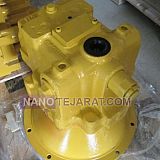
hyundai excavator 210 swing pump M2X146
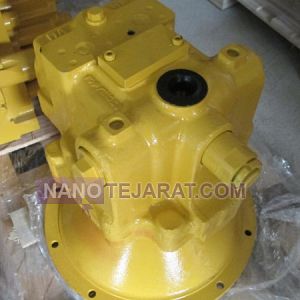
The swing pump of the Hyundai 210 excavator, Kawasaki M2X146 model, is an axial piston motor with a swash plate design, engineered for the rotational movement of the excavator’s swing arm. This pump has a displacement of 145.7 cm³ per revolution, a nominal operating pressure of 30 MPa, and a maximum pressure of 37 MPa. Its maximum flow rate reaches 210 liters per minute, and rotational speed is up to 1650 rpm. These specifications enable the pump to deliver a torque of 12,800 Nm while ensuring precise control of the swing movement. The swash plate design and precise pressure and flow control maintain hydraulic system efficiency even under heavy operating conditions.
During repair, the pump is first removed from the hydraulic system and thoroughly cleaned to eliminate any suspended particles or contaminants. The cylinder block, drive shaft, swash plate, pressure plates, and springs are inspected using precision tools such as micrometers and gauges. O-rings, seals, and other consumable components are replaced, and friction surfaces are carefully refurbished. Pump pressure and flow are tested after repair to ensure performance meets factory standards, with no leakage or power loss.
After replacing and repairing damaged components, the pump is reassembled with precise torque
 | |
| parsianrahbalandeh | 02155429639 |
| yadak disel |
| Iran |
| (+98)9122003350 |
Feed pump
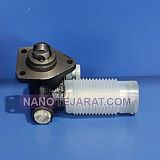
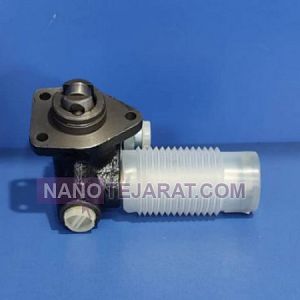
The Komatsu 155 gear pump is a critical component in the hydraulic systems of bulldozers and excavators from this manufacturer. This pump delivers a nominal flow rate of approximately 180 liters per minute at an engine speed of 1900 RPM. The maximum working pressure of this pump is designed to reach 280 kilograms per square centimeter, equivalent to about 270 bars. The pump body is manufactured using an extrusion method with high-pressure pressing, resulting in a smooth surface and high material density. The internal gears of this pump are made from alloy steel with heat treatment reaching 58 HRC for superior wear resistance against tooth surfaces. The number of teeth on each gear typically ranges from 10 to 14 with a module between 3 and 5 millimeters. Precision ground gear profiles ensure volumetric efficiency above 90 percent even after extended operating hours.
The Komatsu 155 gear pump is widely used in bulldozer models D155A, D155C, and D355A along with S6D125 and S6D155 engines. This pump is available in a three-stage configuration capable of supplying hydraulic flow to three independent circuits simultaneously. Using high-quality bushings and high-temperature grade O-ring seals significantly extends pump service life and reduces failure rates. Installation of this pump
 | |
| yadak-disel | 09358809164 |
| parsianrahbalandeh |
| Iran |
| (+98)9122003350 |
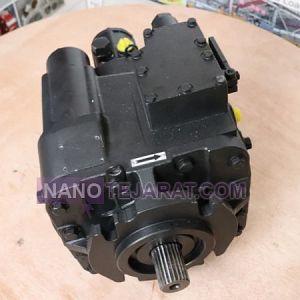
concrete mixer pump PV21
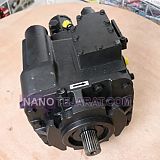
The PV21 and PV23 hydraulic pumps, manufactured by Sundstrand, are axial piston pumps designed for high-reliability operation in concrete mixer hydraulic systems. They can be used in both open and closed circuit systems, providing sufficient flow and pressure for heavy-duty concrete mixing. The PV21 has a displacement of 21 cm³ per revolution, while the PV23 displaces 23 cm³ per revolution. Maximum operating pressures reach 350 bar for PV21 and 360 bar for PV23, with maximum flows of 120 and 130 liters per minute, respectively. Each pump weighs approximately 55–60 kg, and the required input power at operational speed is around 100 kW.
The repair process begins with removing the pump from the hydraulic system and inspecting the housing and external connections for leaks or cracks. The cylinder block, pistons, swash plate, and drive shaft are measured using precision tools such as micrometers and gauges. Worn or damaged components are replaced to restore hydraulic performance and flow to factory specifications. All auxiliary components, including seals and O-rings, are also replaced to minimize leakage and prevent future failures.
After reassembly, the pump undergoes comprehensive performance testing. Operating pressure, output flow, input torque, and noise levels are mea
 | |
| parsianrahbalandeh | 02155429639 |
| hydraulicmarket |
| Iran |
| (+98)9122003350 |
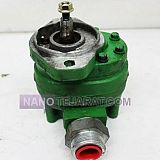
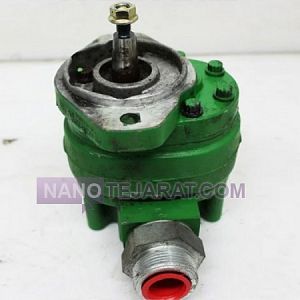
chopper combine pump repair
The hydraulic pump of a chopper combine is typically an axial piston or vane type, designed with a flow capacity between 80 and 120 liters per minute. It operates within a working pressure range of 200 to 250 bar and is responsible for supplying hydraulic oil to systems such as lift cylinders, steering, and the feeding mechanism of the cutter. Proper pump type selection and attention to flow capacity are critical to prevent efficiency loss and overheating of the hydraulic oil during harvesting operations.
The installation location of the chopper combine hydraulic pump is usually at the front of the engine, aligned with the power transmission shaft. The connection is often made through direct coupling or flange mounting to ensure mechanical power transfer without energy loss. At this position, high-pressure hoses and return lines to the hydraulic reservoir are attached, requiring precise sealing to prevent leakage and pressure drops. Any shaft misalignment can lead to increased vibration and significantly reduce pump lifespan.
The repair process of the chopper hydraulic pump includes disassembling all components, thoroughly cleaning them, inspecting piston and vane wear, and checking bearing tolerances with 0.01-millimeter accuracy. If scratches or dimensional changes greate
 | |
| hydraulicmarket | 021-55429639 |
| parsianrahbalandeh |
| Iran |
| (+98)9122003350 |
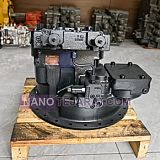
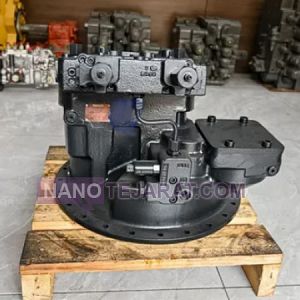
hyundai 912 pump A8VO55
The main hydraulic pump A8VO55, manufactured by Rexroth, is an axial piston pump with a dual design, used in open-circuit hydrostatic systems. It is applied in Hyundai 912 excavators and Liebherr machinery with the following specifications:
* **Displacement:** 2 × 54.8 cm³ per revolution
* **Maximum operating pressure:** 350 bar
* **Peak pressure:** 400 bar
* **Maximum flow:** 2 × 137 liters per minute
* **Input power at maximum speed:** 160 kW
* **Maximum input torque:** 611 Nm
* **Approximate weight:** 82 kg
These specifications demonstrate the pump’s high capacity to provide the necessary pressure and flow for optimal hydraulic system performance in heavy machinery.
During repair of the A8VO55 pump, it is first removed from the hydraulic system, and all external connections and components are inspected. Precision tools such as micrometers and gauges are used to assess the dimensions and condition of internal parts including pistons, swash plate, cylinder block, and drive shaft. Any worn or damaged components are replaced. After component replacement, the pump is carefully reassembled and subjected to performance testing to ensure pressure, flow, and torque meet factory specifications.
Finally, once proper performance is confirmed, the pump is reinstalled
 | |
| parsianrahbalandeh | 02155429639 |
| hydraulicmarket |
| Iran |
| (+98)9122003350 |
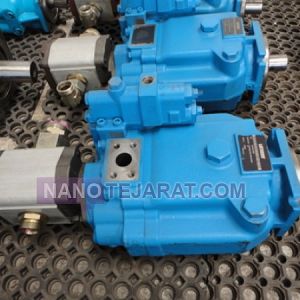
PVH98 vickers hydraulic pump grader 120
The Eaton Vickers PVH98 hydraulic pump used in Caterpillar 120 graders is a variable displacement axial piston pump designed for high-pressure applications up to 280 bar. Its displacement ranges from 98 to 105 cc/rev depending on the swash plate angle, ensuring precise flow control between 120 and 180 liters per minute. The pump housing is made of high-strength alloy steel to withstand mechanical stress, while pistons and valves are precision-machined to maintain internal leakage below 2%. The PVH98 pump supports operating temperatures between -20°C and 90°C, and it requires ISO VG46 hydraulic oil for optimal performance.
During the repair process, the pump is removed and disassembled, with all components inspected for wear, scoring, or corrosion. Pistons, cylinder blocks, swash plates, and seals are replaced using OEM-certified parts. The shaft and rotor are balanced using dynamic testing to minimize vibration. Pressure and flow control valves are calibrated with high-precision gauges to ensure consistent hydraulic output within ±5% of factory specifications.
After reassembly, the pump undergoes bench testing under simulated load conditions. Flow and pressure are measured at various swash plate angles and temperatures to confirm adherence to technical specifications. Pr
 | |
| hydraulicmarket | 021-55429639 |