| Exporter, Wholesale, Manufacturer | |
| Tehran |  |
| +989122003350 | |

- Price :negotiated
TENSIONING PULLY 913 , Iran
- Price :To negotiate
- order by whatsapp
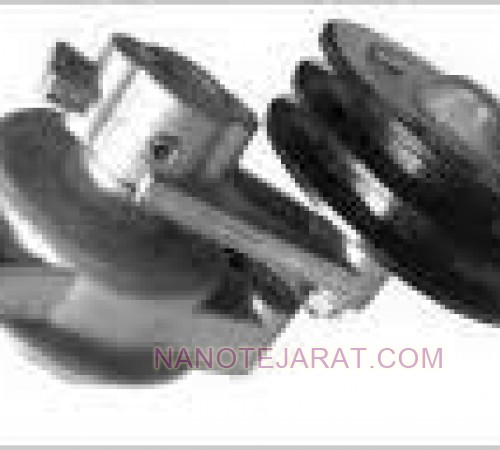
The Model 913 belt tensioner is constructed from A356-T6 aluminum alloy with a tensile strength of 230 MPa. Its pulley is made from hardened ST50 steel with a phosphate coating and solid lubricant. The assembly features a precision adjustment screw with a 1 mm pitch and a Zn-Ni anti-corrosion coating. The screw can apply a constant linear tension force between 300 and 500 Newtons. A double-shielded, flanged ball bearing, model 6203-ZZ, is mounted at the pulleys core. This bearing has a radial play of less than 5 microns. The pulleys outer diameter is 85 mm with a standard groove width of 26 mm.
The tensioner structure comprises a die-cast housing, a central pulley, and a torsional spring mechanism. A chromium-vanadium steel spring with a 3.5 mm wire diameter and 8 active coils is utilized. This spring generates a torsional torque of 12 Nm to maintain constant tension. The pulley is mounted on the bearing shaft with an H6/k5 fit and tolerates a maximum rotational speed of 8500 RPM. The permissible operating temperature range is from -40 to +135 degrees Celsius. The mechanisms designed service life reaches up to 5000 hours under dynamic loading.
You can order and buy TENSIONING PULLY 913 from Iran by contacting us through whatsaap and email.
WEBSITE: TENSIONING PULLY 913 Iran
Replacing the Tensioner Belt: Right Time, Cost, and Key Technical Points
The ideal time to replace a tensioner belt usually follows the manufacturers guidelines. This often coincides with timing belt replacement or every 60,000 to 100,000 kilometers. Wear symptoms like rattling noises or drive system vibration indicate a need for replacement. The replacement cost includes the part and labor, depending on the vehicle and engine model. In industrial projects, costs are based on complexity and production line downtime. A key technical point is adhering to the specified bolt torque during installation. Precise pulley alignment and checking bearing condition are also essential. After installation, the main belt tension must be accurately adjusted.