bolt Iran
Cellphone / Whatsapp: +989122003350
| pichsazan |
| Iran |
| 021-55413167 |
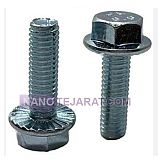
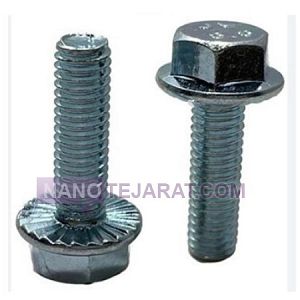
flange hex bolt
The flange hex bolt features a standard hexagonal head with an integrated circular flange directly beneath the head. The flange is designed with an angle of 15 to 30 degrees relative to the bolt axis for uniform stress distribution. Flange diameter for size M10 reaches approximately 22 millimeters while size M20 reaches about 38 millimeters. Flange thickness is typically equivalent to 0.2 to 0.3 times the nominal bolt diameter. The material is carbon steel manufactured in grades 5.6, 8.8, 10.9, and 12.9 according to ISO 898-1 standards. Quenching and tempering heat treatment is mandatory for grades above 8.8 to achieve proper mechanical properties. Anti-corrosion coatings include hot-dip galvanizing with 40 to 80 microns thickness or electroplated zinc white with 5 to 12 microns thickness.
The elimination of a separate washer due to the integrated flange reduces installation torque by up to 15 percent. This design also completely eliminates the risk of losing washers on assembly lines during high-speed production. Ultimate tensile strength for grade 8.8 in size M12 reaches 840 megapascals with a yield torque of approximately 120 Newton-meters. The underside surface of the flange features radial or spiral serrations for locking against vibration and loosening. Serration angle i
 | |
| pichsazan | 021-55413167 |
| rahmati-co |
| Iran |
| 09121933785 |
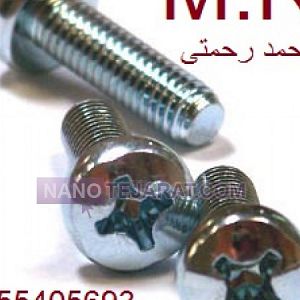
bolt m.r
The cylindrical screw features a perfectly uniform body diameter with a fully threaded or partial thread shank design. The head geometry is precisely machined as either hexagon or hex socket (Allen) type with tight tolerances. Nominal diameter sizes range from M1.6 up to M64 millimeters according to standardized thread profiles. Thread pitch options include coarse (standard) and fine series for specific vibration-resistant applications. The thread angle measures exactly 60 degrees with sharp crest and root radius for optimal load distribution. Pitch diameter tolerance classes include 6g for external threads and 6H for internal threads. The head height to diameter ratio follows a fixed proportion of 0.7 to 0.8 for hexagon heads. Socket head versions have a cylindrical head with 0.5 to 1.5 millimeters chamfer on top edge.
Cylindrical screws are manufactured in property classes 4.6, 5.6, 8.8, 10.9, and 12.9 for steel versions. Class 8.8 screws have minimum tensile strength of 800 Newtons per square millimeter with 640 yield strength. Class 10.9 screws achieve 1040 tensile strength for high-stress bolted connections. Class 12.9 represents the highest strength grade with 1220 Newtons per square millimeter tensile capacity. Stainless steel grades A2 (304) and A4 (316) provide corros
 | |
| rahmati-co | 09121933785 |
| pishropich |
| Iran |
| 021-55414445 |
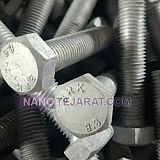
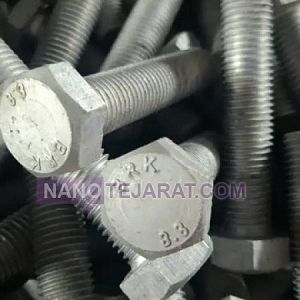
class 8.8 galvanized hex bolt
Grade 8.8 hex bolts are among the most widely used high strength fasteners in machinery, construction, automotive, heavy equipment, and structural steel applications. Manufactured from medium carbon or alloy steel and heat treated through quenching and tempering, these bolts provide an excellent balance of strength, toughness, and durability. The 8.8 property class indicates a minimum tensile strength of 800 MPa and a minimum yield strength of 640 MPa, making them suitable for both static and dynamic loading conditions. Produced in accordance with international standards such as DIN 931, DIN 933, ISO 4014, and ISO 4017, Grade 8.8 hex bolts are commonly available in sizes ranging from M6 to M36 with finishes including zinc plated, hot dip galvanized, black oxide, and zinc flake coatings to improve corrosion resistance and service life.
Thanks to their excellent strength to cost ratio, Grade 8.8 hex bolts are the preferred choice for assembling gearboxes, electric motors, pumps, cranes, mining equipment, agricultural machinery, conveyors, steel structures, and general industrial equipment. Their reliable mechanical properties allow them to withstand high clamping forces while maintaining joint integrity under continuous vibration and cyclic loading. For optimum performance, they
 | |
| pishropich | 021-55414445 |
| pishropich |
| Iran |
| 021-55414445 |
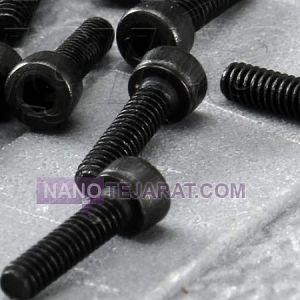
din 912 allen bolt
Full thread steel socket head cap screws are precision engineered fasteners widely used in machinery, mold manufacturing, hydraulic systems, gearboxes, industrial automation, robotics, and precision equipment. Manufactured from alloy steel in Property Classes 8.8, 10.9, and 12.9, these fasteners are produced in accordance with DIN 912 and ISO 4762 standards to ensure high dimensional accuracy and consistent mechanical performance. The cylindrical head with an internal hex drive allows high tightening torque while requiring minimal installation space, making these screws ideal for compact assemblies. Their fully threaded shank provides maximum thread engagement over the entire length, improving load distribution and making them particularly suitable for thin components, tapped holes, and applications requiring full clamping capability.
Full thread socket head cap screws are commonly available in sizes ranging from M3 to M24 with standard lengths from 6 mm to 150 mm, while larger diameters and custom lengths are also available for specialized applications. Surface finishes such as black oxide, zinc plating, phosphate coating, and zinc flake coating enhance corrosion resistance and durability under demanding operating conditions. These fasteners are extensively used in CNC machin
 | |
| pishropich | 021-55414445 |
| ajax-hex-bolt |
| Iran |
| 021-55429480 |
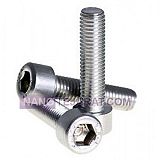
Allen bolt 5.6
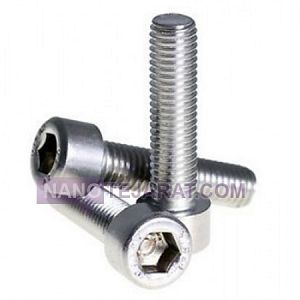
Allen steel bolts are made from carbon steel in various grades such as 5.6, 8.8, and 10.9, offering tensile strength between 400 and 1040 MPa. These bolts are manufactured in diameters ranging from 3 to 30 millimeters and lengths between 8 and 250 millimeters. The standard head angle is typically 90 or 120 degrees, designed according to DIN 912, ISO 4762, and ANSI B18.3 standards. The internal hexagonal geometry of Allen bolts allows for high torque transmission. Surface hardening heat treatments increase wear resistance and mechanical durability. Coatings such as cold galvanizing, hot-dip galvanizing, or black phosphate provide corrosion protection. These bolts are fastened with Allen keys and are widely used in high-precision connections in metal industries, machinery manufacturing, and structural applications.
Allen steel bolts feature metric threads based on ISO standards and are produced in both coarse and fine thread types with manufacturing tolerances of ±0.2 millimeters. Thread profiles often conform to DIN 13 standards and are available in partial or full thread versions. Strength classes 8.8 and 10.9 are suitable for applications with high mechanical loads and repeated stress. These bolts exhibit high resistance to torsional torque and maintain their position withou
 | |
| ajax-hex-bolt | 021-55429480 |
| Iran-all-export |
| Iran |
| +98-9122003350 |
bolt and nut from Iran to Iraq
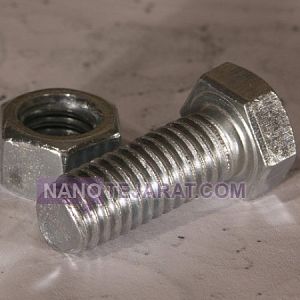
Exporting bolts and nuts from Iran to Iraq is considered one of the growing trade activities in the construction and industrial supply sector, mainly due to the strong economic relations between the two countries and their close geographical proximity, which significantly reduces transportation and logistics costs. Iranian-manufactured bolts and nuts are known for their acceptable production quality and competitive pricing compared to European alternatives, making them a practical choice for construction projects, manufacturing plants, and maintenance workshops in the Iraqi market. These products are available in various international standards such as DIN and ASTM and in different materials including carbon steel and stainless steel, allowing them to meet the technical requirements of the oil, power, and infrastructure sectors.
The Iraqi market shows increasing demand for bolts and nuts imported from Iran, driven by fast delivery times and the ability to supply large volumes suitable for both public and private projects. Successful export of bolts and nuts to Iraq depends on compliance with technical specifications, proper packaging, and the provision of quality and certificate of origin documents, all of which enhance the trust of Iraqi importers. Moreover, the flexibility o
 | |
| Iran-all-export | +98-9122003350 |
| ravansanaat |
| Iran |
| 021-55430262 |
Bolt
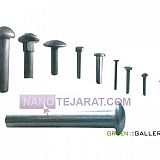
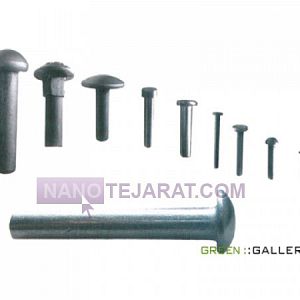
Round head screws are typically made from low-carbon steel Grade 2 or 4.6 with an electro-galvanized coating. Common thread diameters range from M3 to M16 with standard ISO metric pitch. The dome head height is approximately 0.5 to 0.7 times the nominal screw diameter. The fillet radius at the head base is typically 1.2 times the screw diameter. Their tensile strength is a minimum of 400 MPa for Class 4.6. The effective thread depth is designed at about 0.65 times the nominal diameter. A zinc coating with a thickness of 5 to 15 microns is applied. This coating provides corrosion resistance for up to 120 hours in salt spray tests. The allowable tightening torque for an M8 screw is about 10 to 15 Nm. The thread angle is precisely 60 degrees according to ISO 68-1.
The screw structure features a smooth, rounded dome head and a fully or partially threaded shank. The head diameter is about 1.5 to 2 times the nominal screw diameter. The head edges are fully rounded and free of sharp burrs. This design minimizes the risk of injury and surface damage. The overall length of standard screws ranges from 6 to 100 mm. The screw end is typically flat or slightly rounded. Its primary application is in aesthetic joints and high-traffic areas. Thread accuracy is manufactured to Class 6g for gen
 | |
| ravansanaat | 021-55430262 |
| ajax-hex-bolt |
| Iran |
| 021-55429480 |
stud bolt B8M
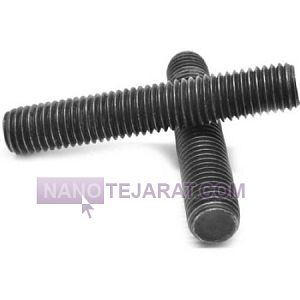
The B8M stud bolt, manufactured according to ASTM A193 Grade B8M, is made from austenitic stainless steel Type 316 and offers excellent resistance to chloride and acidic corrosion. Its chemical composition includes 16–18% chromium, 10–14% nickel, and 2–3% molybdenum. In the annealed condition, it provides a minimum tensile strength of 75 ksi 515 MPa and a minimum yield strength of 30 ksi 205 MPa. The maximum surface hardness is 223 Brinell, and in certain cases, it can be supplied in a strain-hardened condition. B8M stud bolts are typically produced in diameters ranging from 1/4 inch to 2.5 inches with Unified 2A thread class.
The operating temperature range of the B8M stud bolt is from minus 200 to plus 550 degrees Celsius, making it ideal for use in chemical, pharmaceutical, and marine industries. Due to its high molybdenum content, it provides better resistance to chloride-rich environments such as seawater compared to B8 grade. Common applications include heat exchangers, chemical reactors, and process piping systems. These fasteners usually require no additional surface coating due to their inherent corrosion resistance. Quality control includes tensile testing, hardness testing, chemical analysis, and, when necessary, non-destructive tests such as PT or UT. B8M stu
 | |
| ajax-hex-bolt | 021-55429480 |
| ajax-hex-bolt |
| Iran |
| 021-55429480 |
Bolt Stadium B8
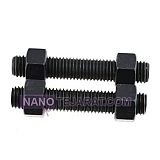
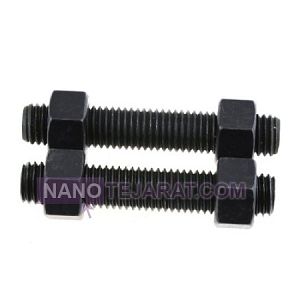
The B8 stud bolt is made from austenitic stainless steel type 304 or its equivalent and is suitable for corrosive and high-temperature environments. This stud bolt is manufactured in accordance with ASTM A193 Grade B8 and has a minimum tensile strength of 75 ksi approximately 515 MPa and a minimum yield strength of 30 ksi about 205 MPa. Its maximum surface hardness is 223 Brinell and it is typically supplied in either annealed or strain-hardened condition. The threads follow the Unified National Thread standard with a 2A class fit, and dimensional accuracy is defined by ASME B1.1. This type of stud bolt is commonly used with grade 8 stainless steel nuts and flat washers.
The operating temperature range for B8 stud bolts is from minus 195 to plus 538 degrees Celsius, making them suitable for applications with extreme thermal variations. These bolts are available in standard diameters from 1/4 inch to 2.5 inches and in various lengths upon request. Their surface offers excellent corrosion resistance without the need for additional coating. B8 stud bolts are primarily used in process equipment within the food, pharmaceutical, oil and gas, and marine industries. To ensure mechanical integrity, tensile, hardness, and when required, non-destructive tests such as PT or MPI are conduc
 | |
| ajax-hex-bolt | 021-55429480 |
| ravansanaat |
| Iran |
| 021-55430262 |
Bolts Metric
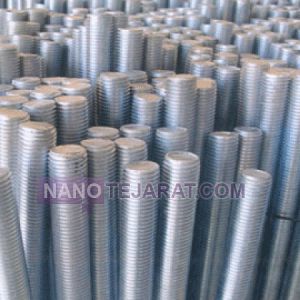
Metric stud bolts are produced from low-carbon steel Grade 4.6 to alloy steel Grade 12.9 per ISO 898-1. Common nominal diameters range from M1.0 to M64 with standard ISO 261 or fine ISO 965 thread pitch. Their tensile strength varies between 400 and 1220 MPa. Standard production lengths range from 6 mm to 3 meters in linear rods. Thread diameter tolerance falls within accuracy classes 6g commercial or 4h precision. The effective thread depth is typically 0.6 to 0.7 times the bolts nominal diameter. The metric thread angle is precisely 60 degrees. Common coatings include electro-galvanizing with a 5-15 micron thickness and yellow passivation. This coating provides corrosion resistance for up to 120 hours in salt spray tests.
The bolt structure is a uniform, fully threaded cylinder without a head. Its ends are typically finished flat or rounded ISO 4753. High-quality grade studs have axial straightness with less than 1 mm deviation per meter. The yield strength of a Grade 8.8 bolt is at least 640 MPa. These bolts exhibit ductility with up to 12% elongation before fracture. The allowable torsional torque for an M10 Grade 10.9 bolt is approximately 50 Nm. The standard operational temperature range is -50 to +150°C. Metric studs are commonly used in industry for cutting, threading
 | |
| ravansanaat | 021-55430262 |
| ajax-hex-bolt |
| Iran |
| 021-55429480 |
20X100 8.8 allen bolt
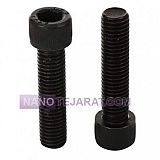
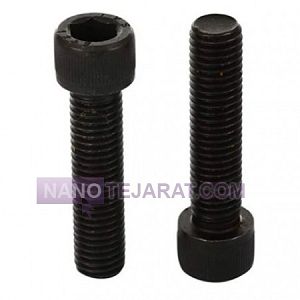
The quenched and tempered steel Allen bolt grade 8.8 size M20 with a length of 100 mm has an approximate weight of 0.51 kg and is manufactured according to DIN 912 standards. Its alloy composition includes 0.25–0.55% carbon, 0.5–0.8% manganese, small amounts of silicon, and less than 0.035% sulfur and phosphorus. This chemical balance improves tensile strength, enhances hardenability, and reduces brittleness under cyclic or high-stress loading.
The heat treatment process for the M20x100 Allen bolt typically involves quenching in oil or water followed by tempering at controlled temperatures. This sequence produces a martensitic structure with a surface hardness of 22–34 HRC. The tempering stage increases toughness, minimizes the risk of brittle fracture, and provides an optimized balance of hardness, strength, and ductility for industrial use.
Industrial applications of the 8.8 M20x100 Allen bolt include oil and gas facilities, heavy mining equipment, construction machinery, and steel structure assemblies. The longer length allows fastening of thicker components and supports higher axial loads. It is also widely used in machines such as hydraulic presses, industrial cranes, and heavy production lines. Protective coatings like phosphating or galvanization further extend
 | |
| ajax-hex-bolt | 021-55429480 |
| ravansanaat |
| Iran |
| 021-55430262 |
Bolt with washer
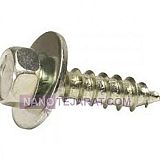
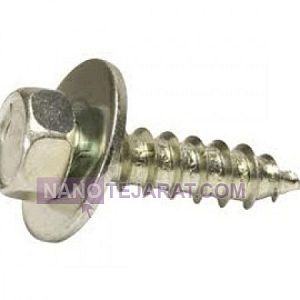
Washer head screws are manufactured from low-carbon steel Grade 4.6 to alloy steel Grade 10.9. Standard thread diameters range from M4 to M24 with coarse pitch per ISO 4017. Their tensile strength varies between 400 and 1040 MPa. The integrated flat washer is typically made from hardened steel with a hardness of 300 to 400 Vickers. The washers outer diameter is designed to be 1.7 to 2.5 times the screws nominal diameter. Washer thickness is approximately 0.15 to 0.3 times the screw diameter. Common coatings include hot-dip galvanizing with a thickness of 45 to 80 microns. This coating provides corrosion resistance for up to 1000 hours in salt spray tests. The final tightening torque for Grade 8.8 ranges from 10 to 600 Newton-meters.
The screw structure consists of a hexagonal head, a fixed washer, and a threaded shank. The head height is typically 0.6 to 0.8 times its nominal diameter. The integrated washer reduces surface pressure by up to 40% by creating a larger contact area. This design prevents head sinking into soft materials. The standard operating temperature range is -50 to +150°C. Production tolerance for thread diameter follows accuracy grade 6g. The washer often features a diamond knurl texture with a depth of 0.05 mm to increase friction. These screws can withsta
 | |
| ravansanaat | 021-55430262 |
| ravansanaat |
| Iran |
| 021-55430262 |
bolt
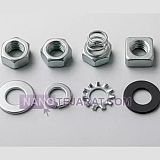
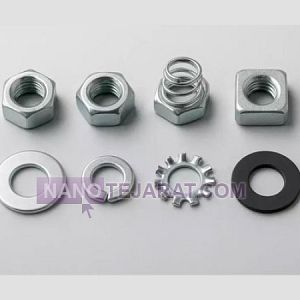
Screws are categorized based on head geometry, thread type, and application. Hex head screws ISO 4017 ranging from M3 to M100 are the most common type. Socket head cap screws Allen ISO 4762 are used in confined spaces. Self-tapping screws for wood and sheet metal feature coarse threads and Pozidriv or Phillips heads. Anchor bolts, such as chemical and mechanical anchors, are designed for concrete. Lag screws with hex heads and tapered threads are used in wood. Socket head and shoulder screws serve precision assembly needs. Their materials range from steel, stainless steel, brass, titanium, and plastic, with strength classes from 3.6 to 14.9. Common coatings include galvanized, nickel, zinc dichromate, and epoxy.
Functionally, screws can be fully threaded, partially threaded, or fine-pitched ISO 965. High-strength structural bolts ISO 898-1 like Grade 10.9 and 12.9 are for heavy loads. Prevailing torque lock screws with integrated washers SEMs are widely used in automotive. Dowel screws have threaded ends on both sides. DIN, ANSI/ASME, and JIS standards define technical specifications. Screw selection depends on tensile/shear load, operating environment, and corrosion resistance requirements. Each screw type requires specific tightening torque and installation methods e.g., pre
 | |
| ravansanaat | 021-55430262 |
| ajax-hex-bolt |
| Iran |
| 021-55429480 |
20X80 8.8 allen bolt
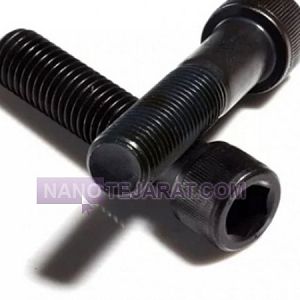
The steel Allen bolt grade 8.8 size M20 with a length of 80 mm has an approximate weight of 0.41 kg and is manufactured according to DIN 912 standards. Its chemical composition contains carbon in the range of 0.25–0.55% and sulfur below 0.035%, ensuring controlled steel quality. The proper carbon content increases tensile strength, while the low sulfur percentage prevents brittleness-related cracking and improves fatigue resistance under cyclic loading.
The M20x80 Allen bolt uses a standard right-hand metric thread with a 60-degree flank angle and a 2.5 mm pitch. This thread type ensures effective engagement and uniform stress distribution along the joint. The effective thread cross-sectional area is about 245 mm², enabling the bolt to withstand axial loads of more than 150 kN, which makes it highly suitable for demanding mechanical applications.
The industrial applications of the 8.8 M20x80 Allen bolt include oil and gas facilities, construction machinery, mining equipment, and heavy steel structures. Its extended length and high strength make it ideal for chassis connections and assemblies subjected to vibration. Additionally, protective coatings such as phosphating or galvanization are often applied to increase wear resistance and prevent corrosion in harsh operating
 | |
| ajax-hex-bolt | 021-55429480 |
| ajax-hex-bolt |
| Iran |
| 021-55429480 |
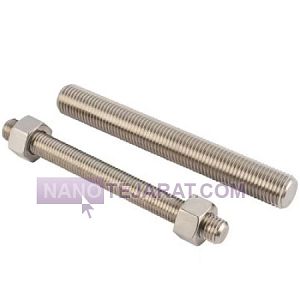
Steel stud bolt
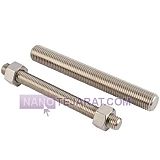
Stainless steel stud bolts are made from austenitic or martensitic stainless steel and are designed for corrosive environments and varying temperature conditions. Their typical chemical composition includes 16 to 18 percent chromium, 8 to 14 percent nickel, and varying amounts of carbon and molybdenum. The tensile strength of these stud bolts usually ranges from 70 to 125 ksi approximately 480 to 860 MPa. Heat treatment involves annealing to maintain flexibility and, in some cases, tempering to increase hardness. The surface hardness of stainless steel stud bolts ranges between 200 and 300 Brinell, and common diameters are produced from 1/4 inch to 3 inches. Threads are manufactured according to ASME B1.1 standard with class 2A or 3A fits.
Operating temperatures for stainless steel stud bolts range from minus 200 to plus 600 degrees Celsius, offering stable performance and excellent corrosion resistance. Their main applications include oil, gas, petrochemical, food, and pharmaceutical industries. Surface coatings are generally unnecessary due to the inherent stainless properties of the steel. Quality control involves tensile testing, hardness testing, chemical analysis, and non-destructive tests such as PT and UT. These stud bolts are ideal for critical connections in industri
 | |
| ajax-hex-bolt | 021-55429480 |