Pneumatic Cylinder
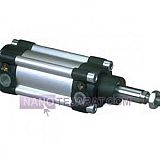
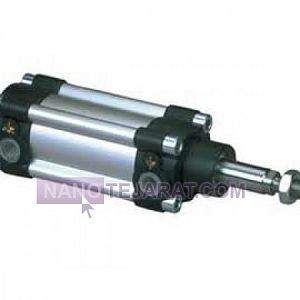
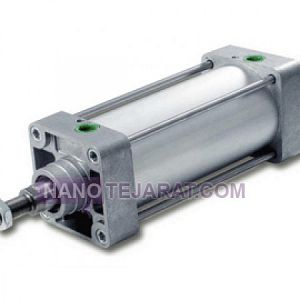
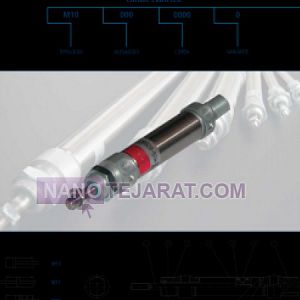
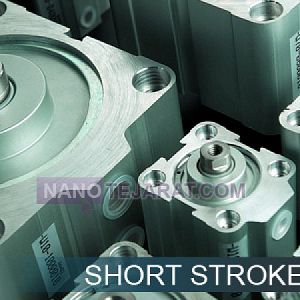
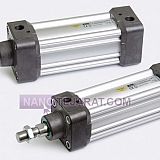
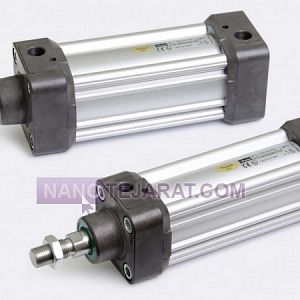
A pneumatic cylinder is a linear actuator that converts compressed air energy into mechanical motion. Cylinder diameters range from 12 to 250 millimeters, with stroke lengths from 10 to 2000 millimeters. The cylinder body is made of aluminum or stainless steel, capable of withstanding working pressures of 6–10 bar. Internal pistons feature NBR or FKM seals to prevent air leakage, resist wear, and operate up to 80°C. The piston rod is chrome-plated or stainless steel, with internal lubrication providing a service life exceeding 5 million cycles.
Structurally, the cylinder consists of the main body, piston, piston rod, seals, return or double-acting spring, and air ports. The internal mechanism ensures smooth linear motion with minimal friction and vibration. Types include single-acting, double-acting, magnetic, and telescopic cylinders, allowing sensor installation and speed adjustment. These cylinders are widely used in production lines, automated machinery, and pneumatic mechanical systems.