
| Exporter, Wholesale, Manufacturer | |
| Tehran_North |  |
| +989122003350 | |

- Price :negotiated
elevator control panel , Iran
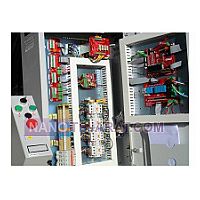
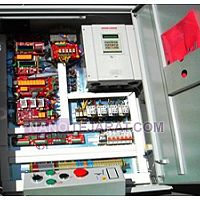
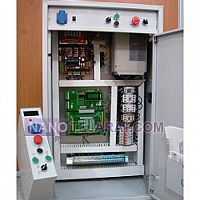
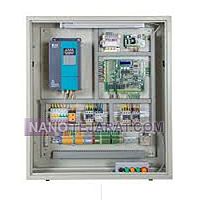
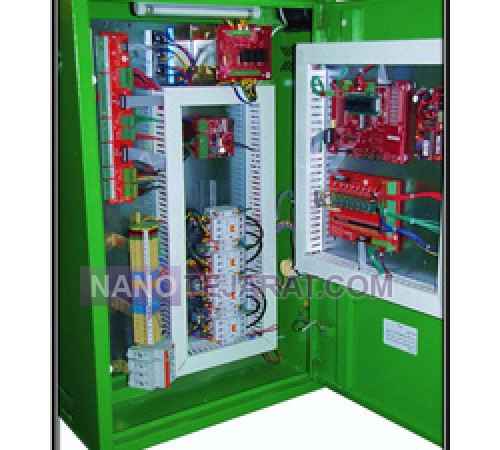
An elevator control panel is the central unit responsible for motion control, safety management, and signal processing in traction and hydraulic systems. Input voltage is typically 380 to 400 volts AC three phase at 50 or 60 hertz. A VVVF drive rated between 5 and 45 kilowatts ensures smooth acceleration and deceleration. Inverter output current ranges from 15 to 120 amperes depending on system capacity. The main processor operates on a 32 bit microcontroller with clock frequency between 72 and 200 megahertz. Cabin stopping accuracy is maintained within ±3 millimeters using encoder based feedback algorithms.
The structure includes a main control board, drive module, safety contactors, and a 24 volt DC switching power supply. Metal enclosure protection is generally rated between IP20 and IP54 with sheet thickness of 1.5 to 2 millimeters. Insulation resistance between phase and chassis exceeds 100 megaohms at 1000 volts DC test. Protective systems include overload relays, short circuit protection, and phase monitoring circuits. Operating temperature range is defined from minus 10 to plus 55 degrees Celsius. Quality assurance involves full functional testing, rated load trials, and electromagnetic compatibility EMC evaluation.You can order and buy elevator control panel from Iran by contacting us through whatsaap and email.
WEBSITE: elevator control panel Iran
Installation and Commissioning of Elevator Control Panel in iran
Installation and commissioning of an elevator control panel is a specialized process that must comply with electrical safety regulations and control system standards. First, the installation location is prepared with proper ventilation, at least 30 cm clearance from side walls, and grounding resistance below 2 ohms. The three phase 380 V or single phase 220 V supply is connected using appropriate circuit breakers and protection devices. Wiring of the motor, encoder, floor sensors, and safety circuits is completed according to the manufacturer schematic with precise terminal identification. Inverter parameters such as rated current, acceleration, deceleration, and stop timing are configured within permissible limits. After configuration, no load testing followed by full load testing up to 100 percent cabin capacity is performed. Finally, fault codes are reviewed and multiple travel cycles confirm stable operation.