
| Exporter, Wholesale, Manufacturer | |
| Tehran-South |  |
| +989122003350 | |

- Price :negotiated
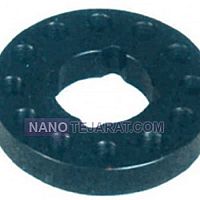
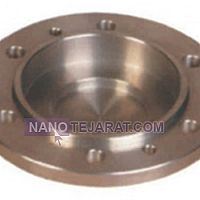
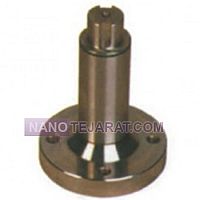
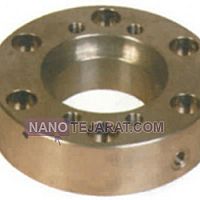
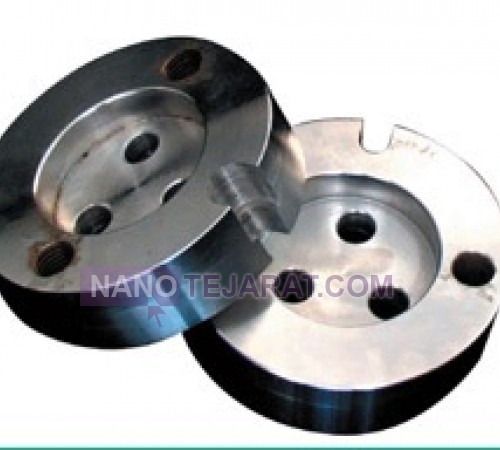
flange for clutch , Iran
- Price :To negotiate
- order by whatsapp
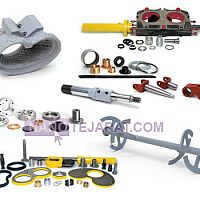
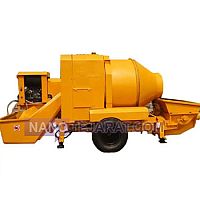
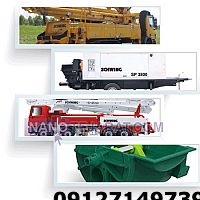
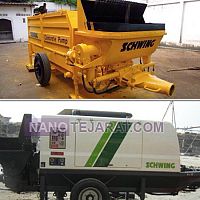
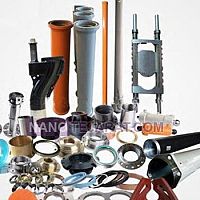
Stationary concrete pump spare parts include concrete delivery assemblies, hydraulic units, switching valve systems, and heavy duty wear resistant components. Nominal operating pressure typically ranges from 75 to 120 bar, with pumping capacities between 40 and 120 cubic meters per hour. Delivery cylinders are manufactured with internal diameters from 160 to 230 millimeters and strokes of 1300 to 2000 millimeters. Concrete pistons use polyurethane rings with compressive strength above 32 megapascals. Delivery pipes are produced from alloy steel with hardness between 56 and 64 HRC. Wear plates and cutting rings exceed 550 Brinell hardness to extend service life.
The chassis structure is fabricated from structural steel with minimum yield strength of 355 megapascals to ensure stability under continuous loading. The hopper is equipped with an agitator rotating at 20 to 30 revolutions per minute to prevent segregation. The S valve or rock valve switches flow direction at 15 to 30 cycles per minute. A hydraulic piston pump rated at 90 to 160 kilowatts delivers 170 to 260 liters per minute. Machining tolerances for bushings and pins are maintained below 0.05 millimeters. Quality control includes static pressure testing, leakage inspection, and non destructive evaluation of stressed components.You can order and buy flange for clutch from Iran by contacting us through whatsaap and email.
WEBSITE: flange for clutch Iran
Periodic Maintenance and Service Cost of Stationary Concrete Pump Components
The maintenance cost of a stationary concrete pump depends on operating hours, working pressure, and concrete quality. On average, periodic servicing represents 3 to 7 percent of the equipment’s annual value. Wear parts such as delivery cylinders, rubber pistons, and S valves should be replaced every 400 to 800 operating hours. Consumable component expenses may increase up to 12 percent in high density projects. Hydraulic oil must be tested every 1000 hours or every six months and replaced if viscosity drops. Implementing preventive maintenance can reduce unexpected failure rates by up to 35 percent. Recording pipeline pressure and oil temperature data is essential for wear trend analysis. Accurate life cycle cost estimation requires LCC evaluation and MTBF calculation of critical components.