

| Exporter, Wholesale, Manufacturer | |
| Tehran-South |  |
| +989122003350 | |

- Price :negotiated
polift , Iran
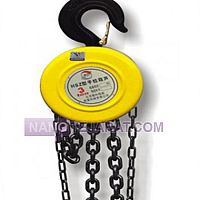
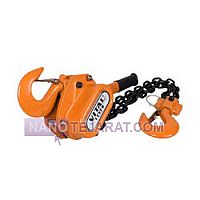
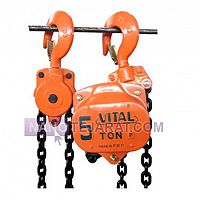
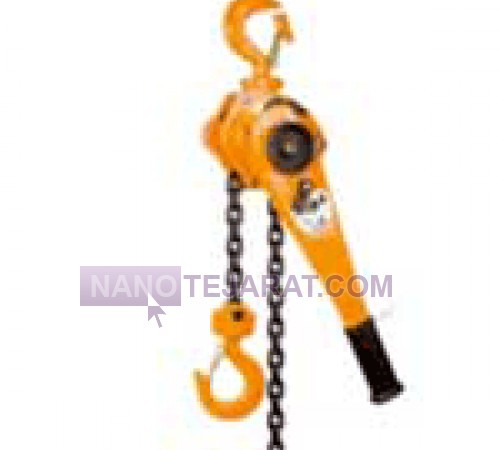
A chain hoist is a mechanical manual device for vertical load lifting. Its standard capacity ranges from 0.5 to 20 tons. The core mechanism operates on a high-ratio wheel and axle system. Gears are manufactured from hardened chrome-molybdenum steel. This design ensures a mechanical efficiency exceeding 85%. The load chain is Grade 8 alloy steel with a galvanized coating. The hook is forged steel and proof-tested to twice the nominal capacity. An automatic load-sensitive brake prevents free fall of the load. The main body is high-strength aluminum alloy or cast steel.
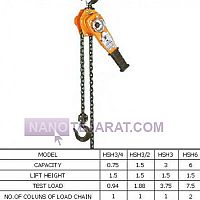
Unit weight for a 1-ton model is approximately 16 kg. Standard chain lengths are typically 1.5 or 3 meters. The permissible pull angle from the vertical axis is a maximum of 30 degrees. The manual force required to lift a 1-ton load is about 36 kgf. It is designed for mounting on I-beams with flange widths of 70 to 250 mm. Travel rollers are hardened steel with anti-wear coatings. The hoist is operational in temperatures from -20°C to +150°C. Periodic lubrication of bearings and gears every 50 operating hours is mandatory.You can order and buy polift from Iran by contacting us through whatsaap and email.
WEBSITE: polift Iran
Types of Manual Hoists and Their Applications
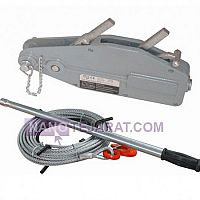
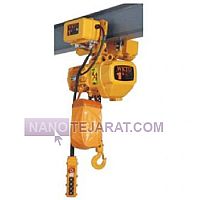
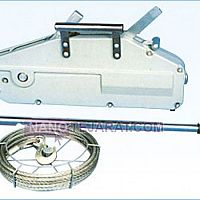
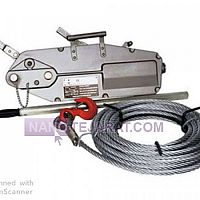
Hoists are produced in three main types: chain, strap, and wire rope. Chain hoists use steel chains with grade 80 or 100. This type is suitable for heavy loads up to 20 tons, harsh environments, and high temperatures. Applications include steel industries, construction, and heavy machinery maintenance. Strap hoists utilize woven polyester straps with a protective coating. Their advantages are light weight, being spark-free, and high flexibility. They are ideal for food, pharmaceutical, automotive industries, and handling sensitive components. Wire rope hoists operate with coated steel wire rope. This model offers a combination of high strength and moderate flexibility. Primary applications are in marine, mining industries, and permanent suspension systems. The type selection depends on load weight, working environment, and safety considerations.