
| Exporter, Wholesale, Manufacturer | |
| Tehran |  |
| +989122003350 | |

- Price :negotiated
helicoil , Iran
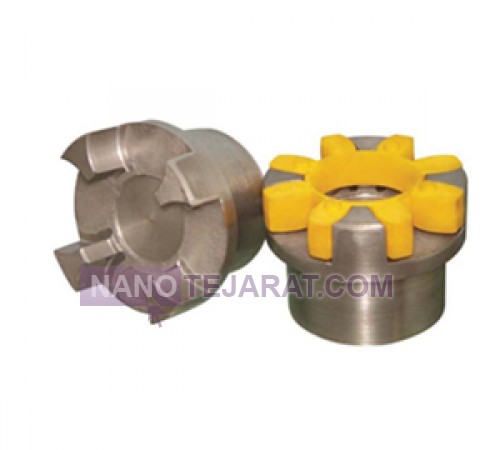
Flexible couplings are manufactured from quenched 4140 alloy steel with a yield strength of 850 MPa. Standard outer diameters range from 35 to 250 mm, designed for 10 to 5000 Nm torque transmission. Their misalignment tolerance compensates for 0.5 mm axial, 0.25 mm radial, and 0.5 degree angular deviation. Elastomeric elements use 98 Shore A polyurethane or Hytrel, operating from -40 to +120°C. Natural frequency typically exceeds 5000 Hz to prevent resonance. Installation uses high-friction clamp-type hubs, requiring no keyway.
The coupling structure comprises two metallic hubs and a central flexible element. This design transmits torsional torque with a stiffness of 100 to 10,000 Nm/rad. Couplings can absorb sudden shock loads up to 300% of rated torque. Static and dynamic balancing meets ISO G6.3 grade for speeds up to 10,000 RPM. Hubs are often protected with anti-corrosion phosphate or epoxy coating. Maintenance-free couplings offer a service life exceeding 20,000 hours of continuous operation. Standard materials provide a continuous operating temperature range from -30 to +100°C.You can order and buy helicoil from Iran by contacting us through whatsaap and email.
WEBSITE: helicoil Iran
Types of Couplings and Their Applications
Couplings are categorized into several main types based on design and function. Rigid couplings are used for connecting two perfectly aligned shafts and are applied in centrifugal pumps and precision compressors. Flexible couplings compensate for misalignment, vibration, and shock. This type includes gear couplings, jaw couplings, and elastomeric couplings. Gear couplings are suitable for high torque and medium speeds in turbines and generators. Jaw couplings with an elastomeric element are used for shock absorption and high speeds in pumps and fans. Disc and diaphragm couplings are employed for high torque transmission with angular accuracy in precision machinery and robotics. Fluid couplings, such as torque converters, are used for soft starts and torque control in the automotive and rolling mill industries. The choice of coupling type depends on torque, speed, degree of misalignment, and working environment.