
| Exporter, Wholesale, Manufacturer | |
| Tehran-South |  |
| +989122003350 | |

- Price :negotiated
Compressor Repair , Iran
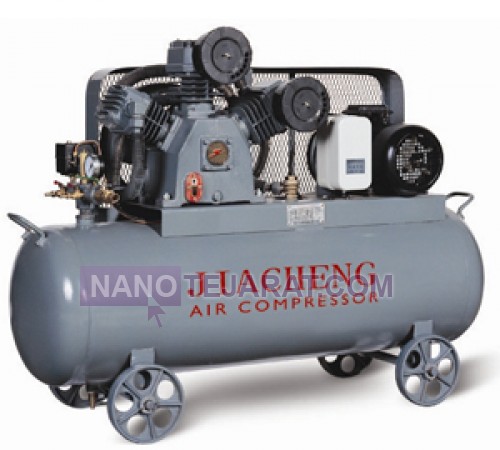
Our repair service covers piston, screw, and centrifugal compressor types. The process begins with comprehensive electrical and mechanical system diagnostics. This phase includes motor, control panel, pressure valves, and thermostat inspection. Critical components like piston rings, bearings, and check valves are examined. Worn cylinders undergo boring and honing with a 0.01 mm tolerance. For screw compressors, rotors are checked for wear and air gap clearance. If needed, rotors are precision-machined or replaced to original profiles. Cooling systems and oil separators are fully serviced and cleaned.
The reassembled compressor undergoes hydrostatic pressure and performance testing. These tests are conducted in three phases: no-load, half-load, and full-load. Performance is evaluated based on flow rate, final pressure, and operating temperature. All parameters are measured and recorded using calibrated instruments. Common issues like efficiency loss, high power consumption, and excessive vibration are resolved. The service includes a 6-month parts warranty and a 3-month labor warranty. A final technical report contains pre- and post-repair performance data. Immediate online and telephone support for recommissioning is provided. This service is essential for manufacturing, dental, and petrochemical industries.You can order and buy Compressor Repair from Iran by contacting us through whatsaap and email.
WEBSITE: Compressor Repair Iran
Specialized Repair of Piston, Screw, and Scroll Compressors
Compressor repairs vary based on type and mechanical design. For piston compressors, the focus is on replacing rings, inlet/outlet valves, bearings, and connecting rods. Screw compressor repair involves rebuilding male and female rotors, replacing axial and radial bearings, and mechanical seals. Scroll compressors require repair or replacement of fixed and orbiting scrolls, mechanical seals, and bearings. For all types, thorough system flushing to remove particles and contaminants before reassembly is essential. Precise alignment requirements and adjusting internal clearances per manufacturers manual are key principles. Leak and performance testing under load and vacuum after repair is mandatory. These repairs must be performed by experienced technicians with calibrated tools in a clean environment.